Gamle Strynefjellsvegen – Driving Norway’s Historic Old Strynefjell Road
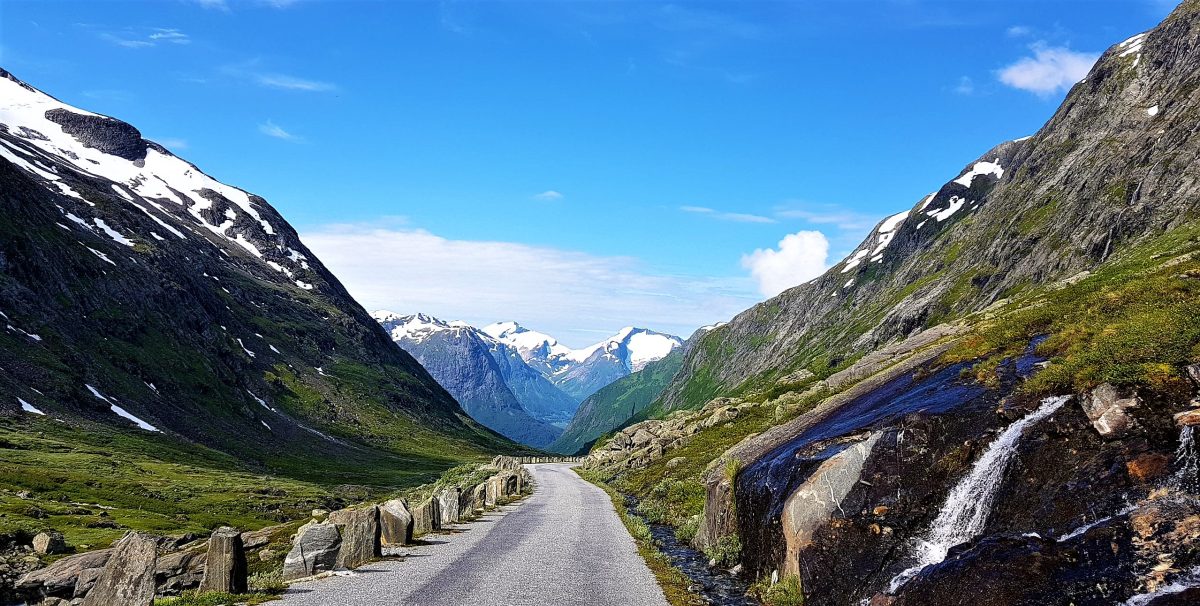
Some roads were built for speed. Gamle Strynefjellsvegen was built by hand, stone by stone, more than 130 years ago – and it still feels that way. It also gave me one of the most beautiful views I have ever seen from a car.
This narrow gravel road – also spelled Gamle Strynefjellsveien, or the Old Strynefjell Road in English – winds 27 kilometers across the wild mountain plateau between Grotli and Videseter, before plunging down a green valley towards the fjords of Western Norway. It’s slow, it’s narrow, and in places there’s only room for one car.
That’s exactly why I love it.
Of all the mountain roads I’ve driven in Norway, Gamle Strynefjellsvegen is one of my absolute favorites. By the time we started the descent, I had almost run out of superlatives.
Quick Facts: Gamle Strynefjellsvegen
- Route: County Road 258 (Fv258), Grotli to Videseter
- Distance: 27 kilometers (17 miles)
- Road surface: Largely gravel, with sections only one car wide
- Driving time: Just under 1 hour non-stop – plan for 2–3 hours with stops
- Season: Usually open from June until October (closed in winter)
- Vehicle restrictions: No vehicles over 8 meters long or with axle load over 8 tons, from Grotli to the county border near Stryn Summer Ski Centre
- Status: National Scenic Route since 1997, and a protected cultural heritage road
- Alternative: The new Strynefjell road (Rv15) runs parallel through tunnels – open all year
ESSENTIAL STOPS ON GAMLE STRYNEFJELLSVEGEN
- Grotli: A road junction with a hotel and cabins, where the old road starts. The road to Geiranger also branches off here.
- The mountain lakes: Emerald-green lakes and wide views across the plateau shortly after leaving Grotli.
- The high plateau: Snow and ice lingering on the lakes well into July. Stop, walk a few steps and enjoy the silence.
- Stryn Summer Ski Centre: Right by the road, just before the descent to the west.
- The descent through Videdalen: A green valley, snowy peaks and the fjord far ahead.
- Videseter: Where the old road meets Rv15 again. Historic hotel and the Videfossen waterfall.
- Hjelle: The old road originally started at the jetty here, by Lake Oppstrynsvatnet. A good place for a short walk.
Tip: At Stryn Summer Ski Centre you can join a guided glacier walk in summer, if you are fit enough. It is seasonal and must be booked in advance – see strynsommerski.com.
Grotli: Starting Point for Gamle Strynefjellsvegen
Coming from the east – from Lom and Gudbrandsdalen – Grotli is where the old road starts. Here you choose: the fast new road through the tunnels, or the old road over the mountain.
Choose the old one. You won’t regret it.
Grotli is also where the road towards Geiranger branches off, which makes Gamle Strynefjellsvegen easy to combine with a visit to one of Norway’s most famous fjords.
Grotli itself is just a road junction with a hotel and some cabins, so there is not much reason to stop here.
A Road Built by Hand
Before you drive on, it’s worth knowing what lies beneath your wheels.
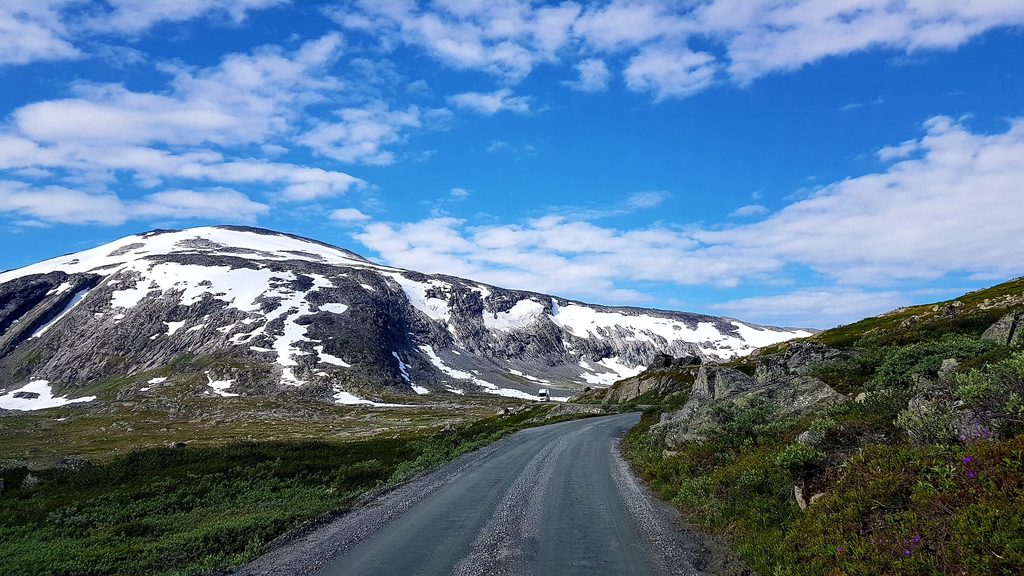
Gamle Strynefjellsvegen was built in the late 1800s, with construction between Videseter and Grotli starting in 1889. Workers carved the road into the mountain with hand tools, and they built the stone walls and placed the guard stones along the edge by hand.
Many of those old guard stones are still standing. The road was the main route between Eastern Norway and Nordfjord for decades. Today it’s both a National Scenic Route and a protected heritage road.
When you drive it, you’re not just on a scenic drive. You’re driving through a piece of Norwegian history.
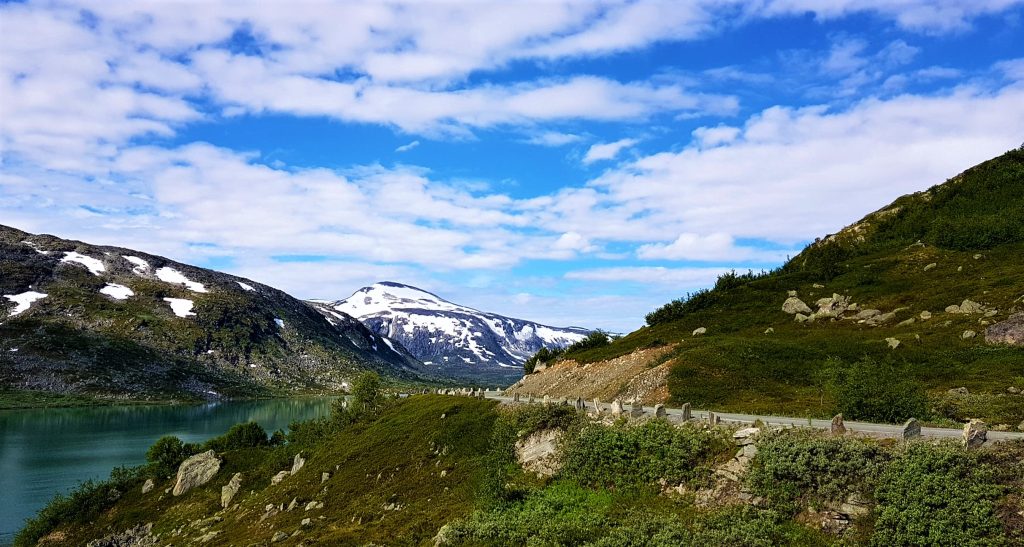
Crossing the Plateau: Lakes, Snow and Silence
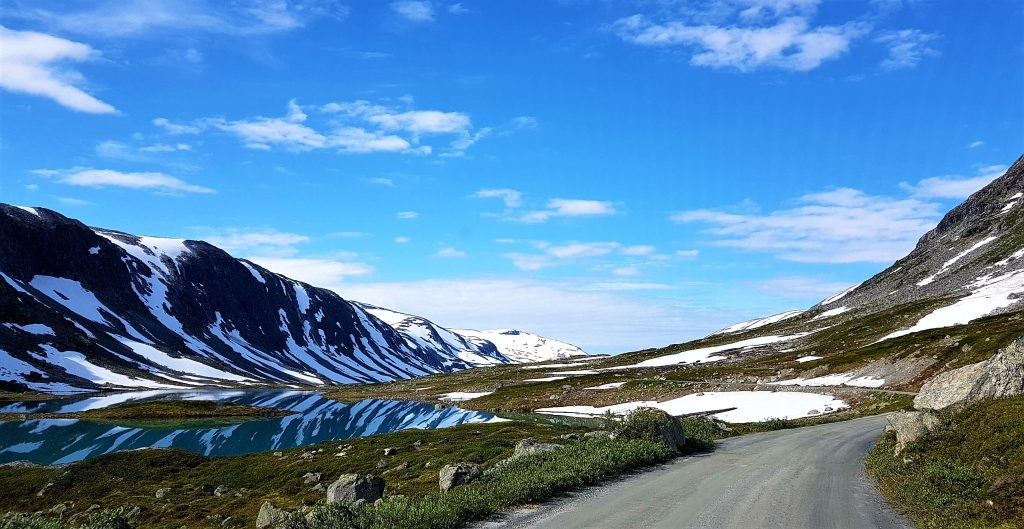
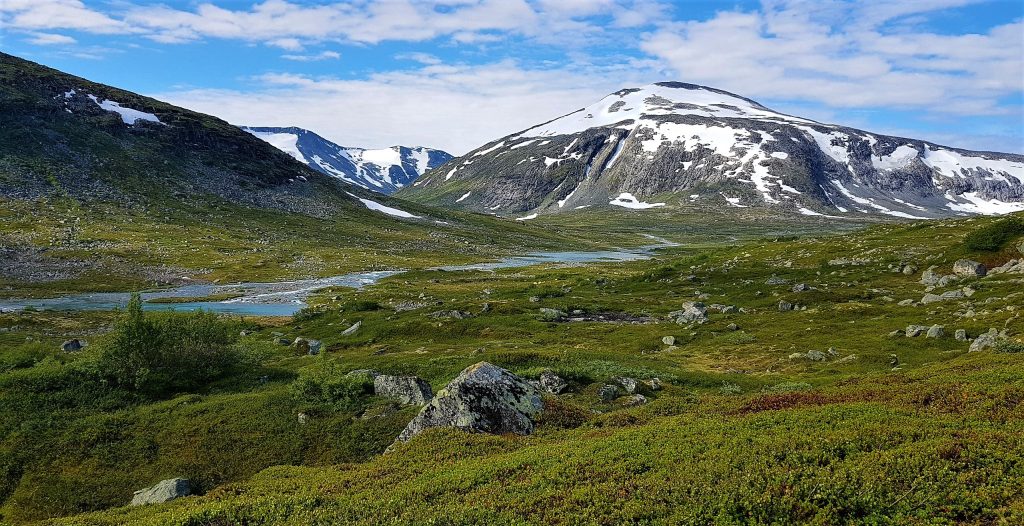
Shortly after leaving the main road, the birch trees disappear and the landscape opens up. A beautiful emerald-green mountain lake appears, and suddenly you have wide views across the plateau towards the Strynefjell mountains.
Even in late July, snow still covered the mountains when we drove here. Early in the summer, the road is known for its towering snowbanks – walls of snow on both sides of the car.
Up here, it’s quiet. Really quiet. We stopped by the roadside, walked a few steps out into the mountains, and added a stone to a cairn.
Near Stryn Summer Ski Centre, the mountain lake was still covered in ice – in July.
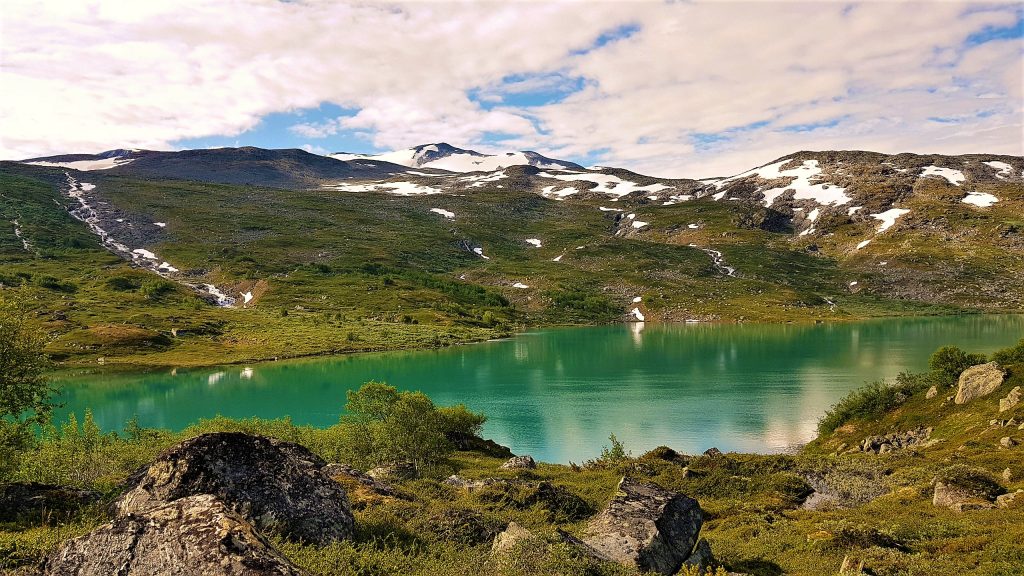
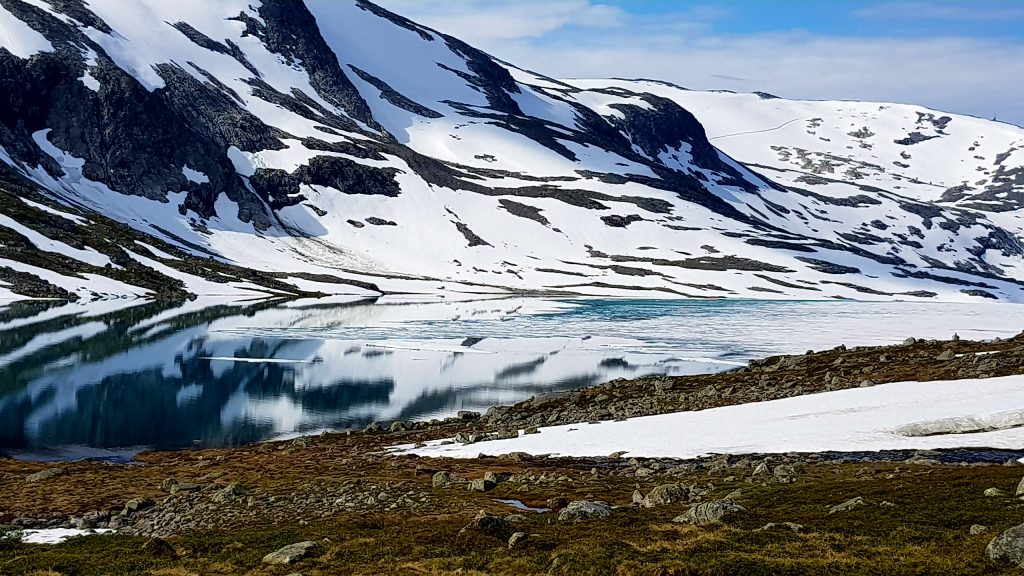
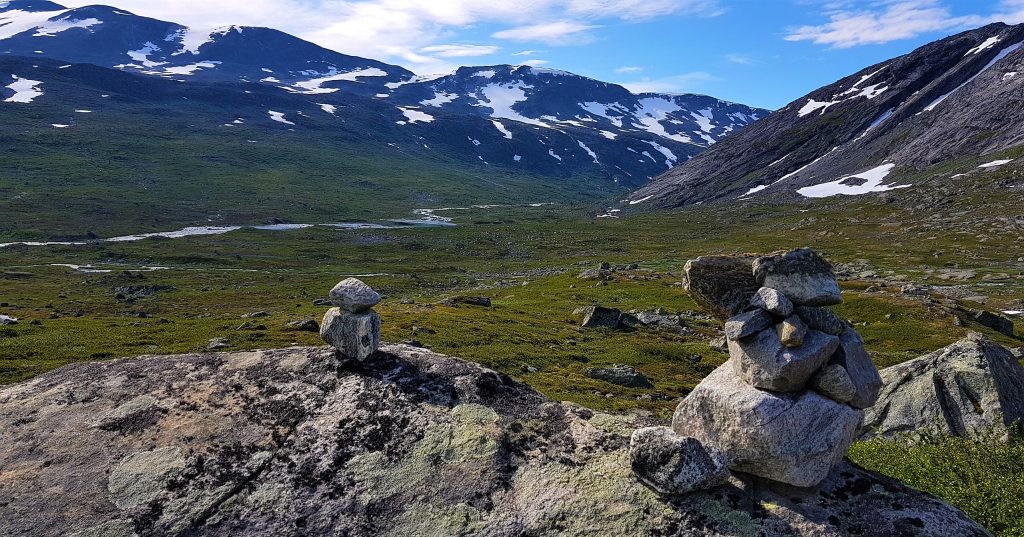
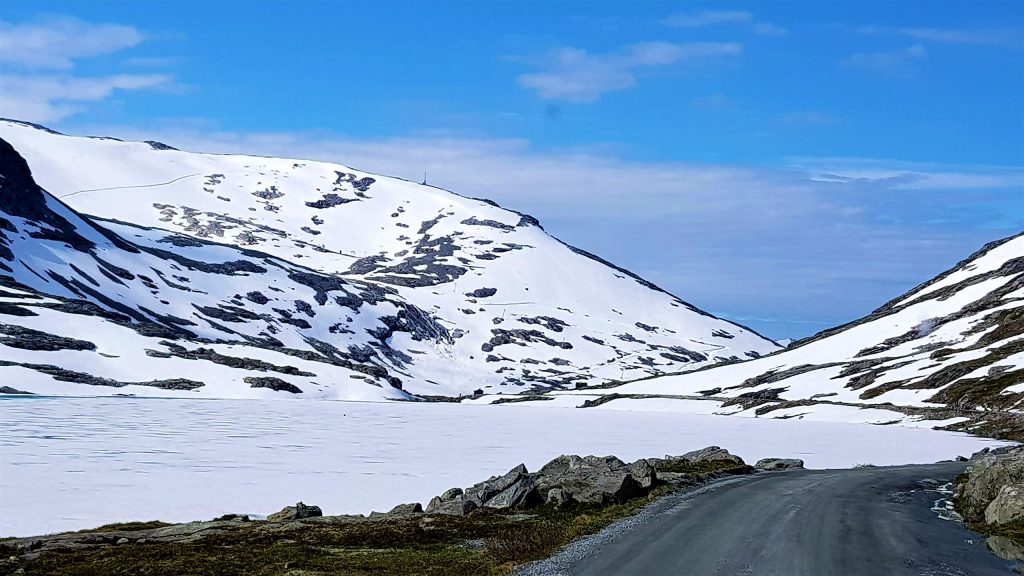
The whole drive across the plateau gives you wonderful views of mountain lakes and peaks. The color of the water, the silence, the nature – it all stays with you.
The Grand Finale: Descending Through Videdalen
Then the descent begins. For me, this is the best part of the whole drive.
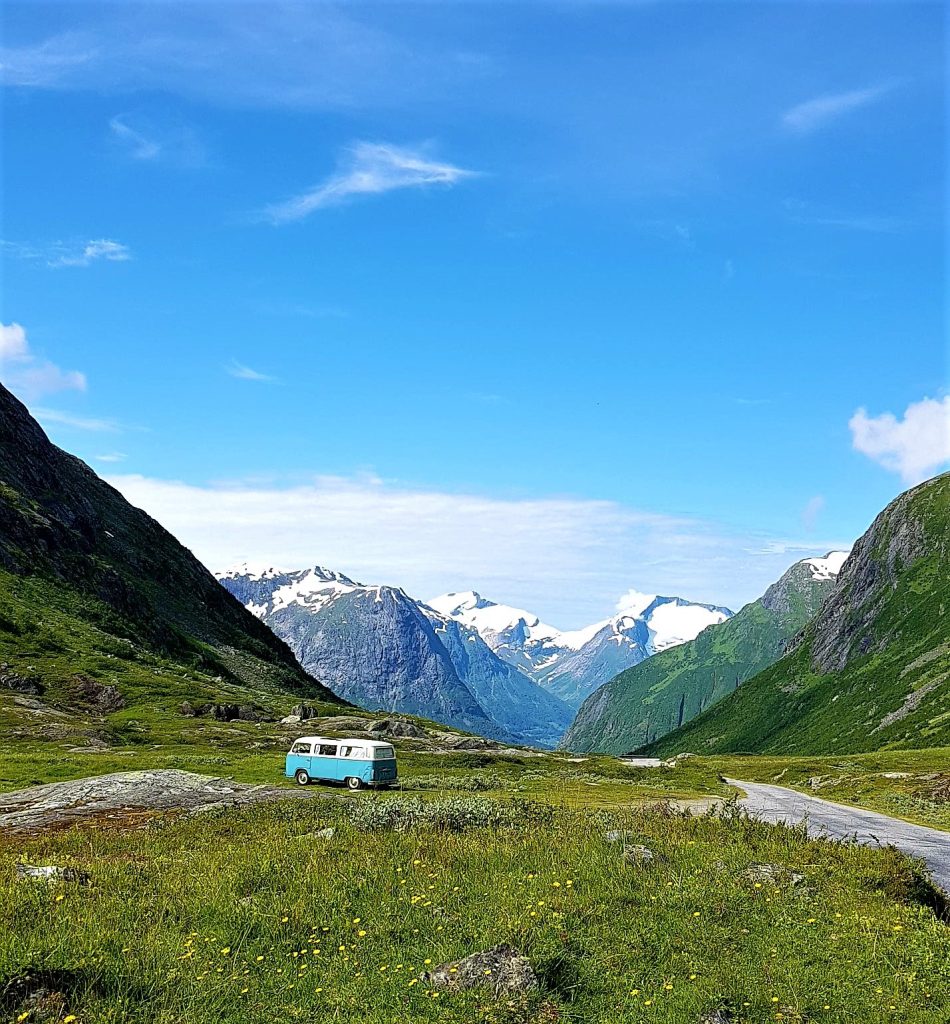
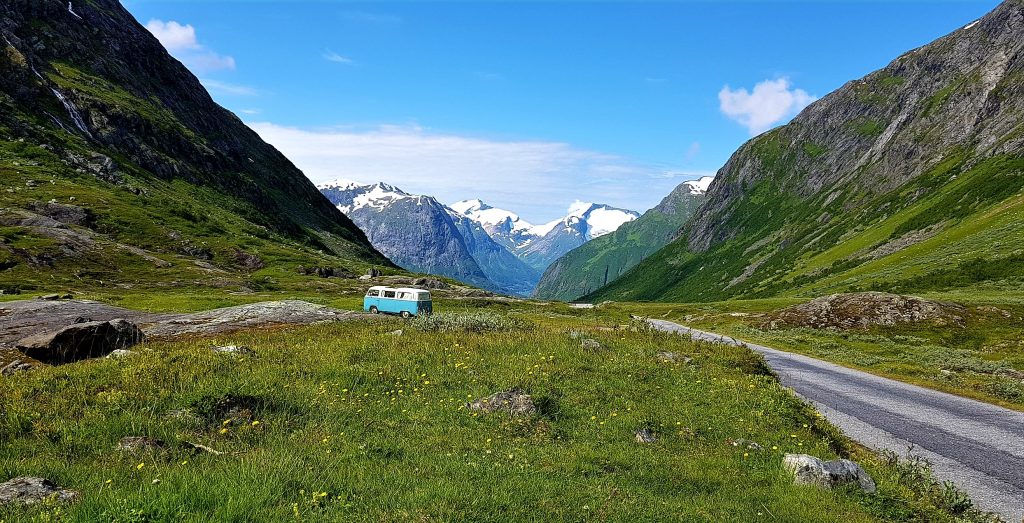
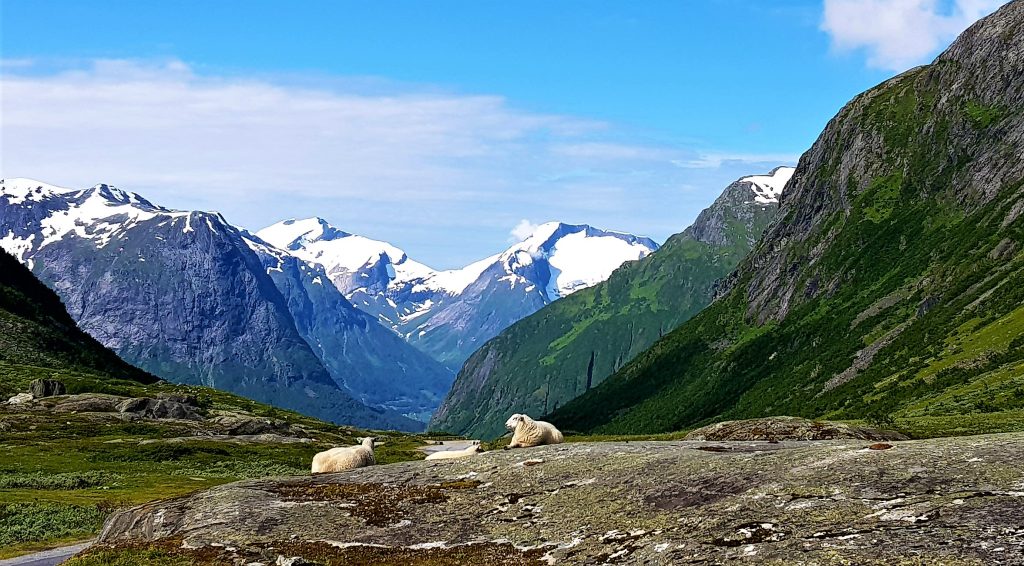
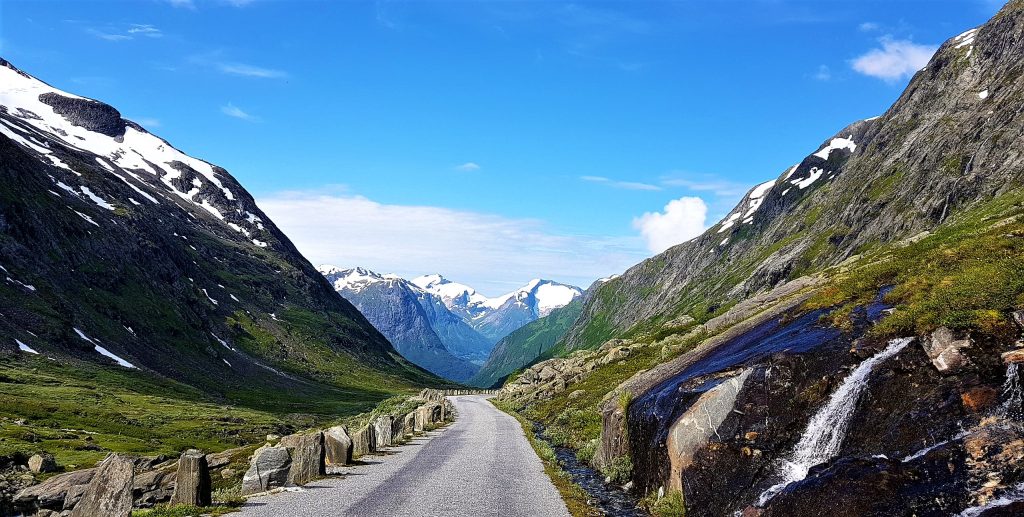
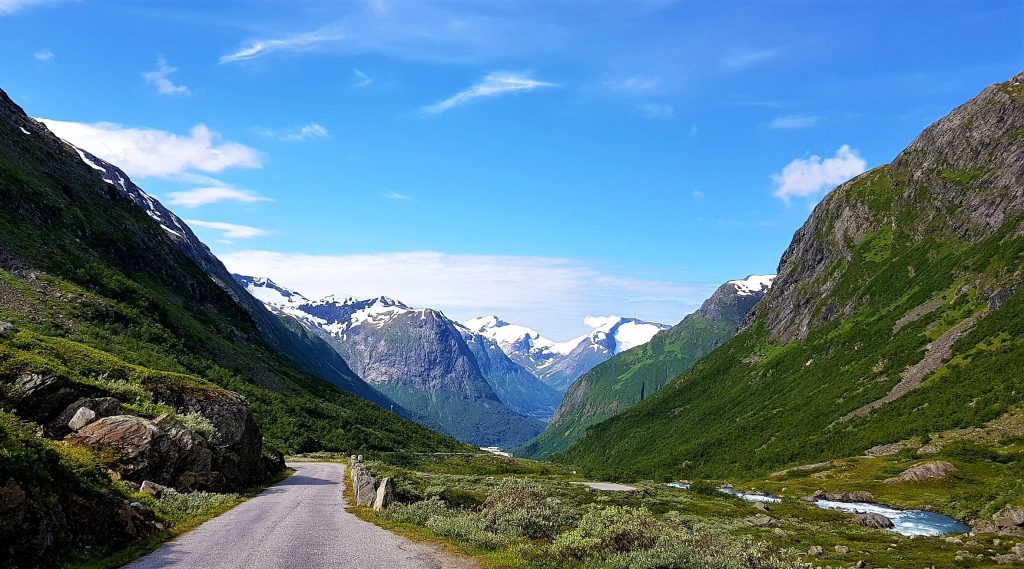
The view that opens up is hard to describe in words. Far, far ahead lies the fjord. Below you, a lush green valley. And all around, high mountains with white peaks.
For me, this is the very best of Norway and Norwegian nature.
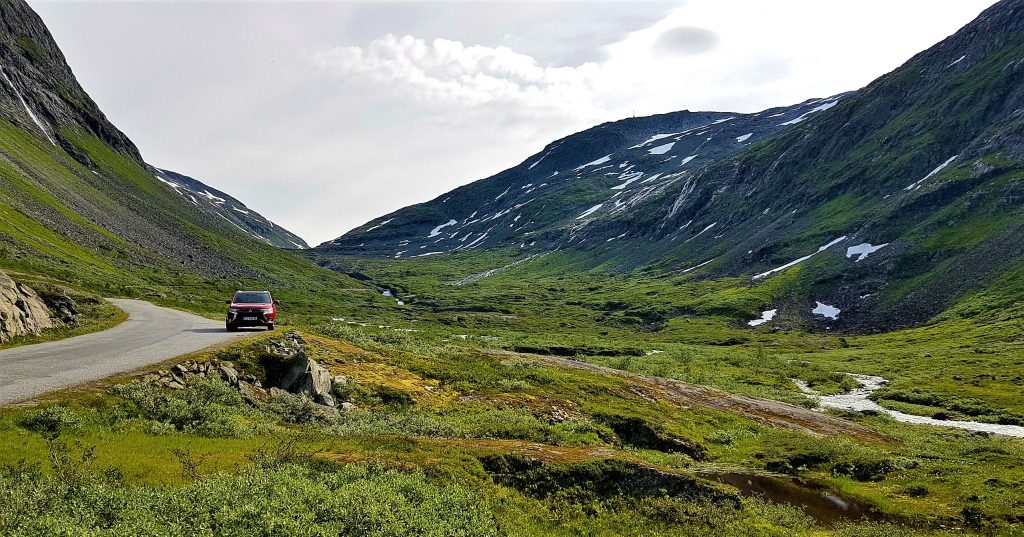
The narrow road winds its way down the valley, with towering mountains on every side. And yes – the road really is as narrow as it looks in the photos.
At the best viewpoint, I got an unexpected gift as an amateur photographer. A group of German tourists had parked their old Volkswagen camper van in exactly the right spot. Nostalgic and beautiful. They had no idea how happy they made me – that photo has become one of my personal favorites from our road trips in Norway.
Sharing the Road with the Locals
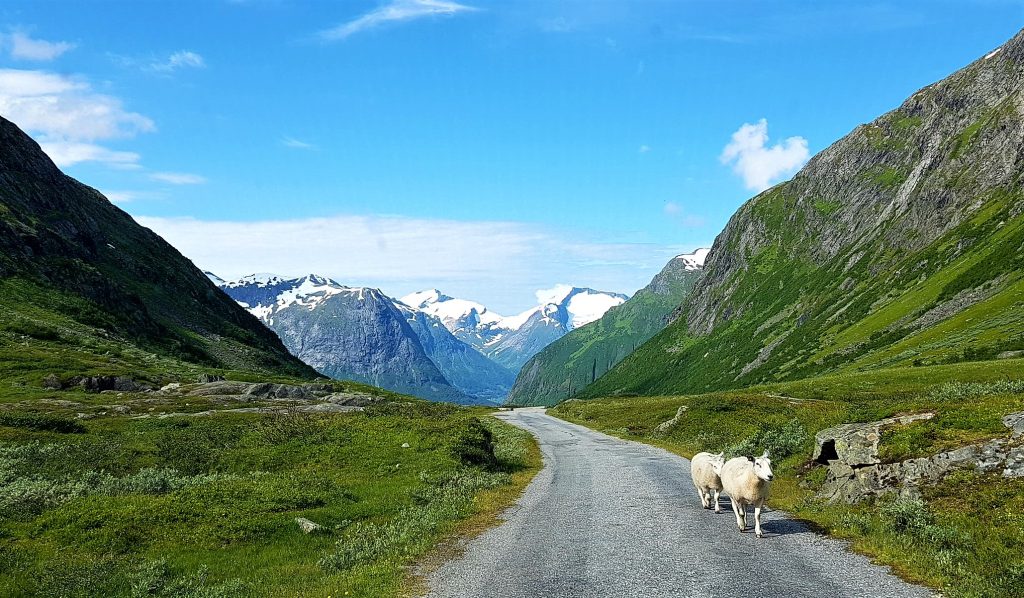
On the way down, we had company. A small flock of sheep had claimed the road as their own.
That’s part of the charm here. In summer, sheep graze freely in the Norwegian mountains, and they don’t always move just because a car arrives. Slow down, be patient, and enjoy the moment – it’s their mountain, after all.
Videseter and Hjelle: Where the Old Road Ends
At Videseter, the old road meets Rv15 again. The historic Videseter Hotel sits high above the valley with views of the Videfossen waterfall.
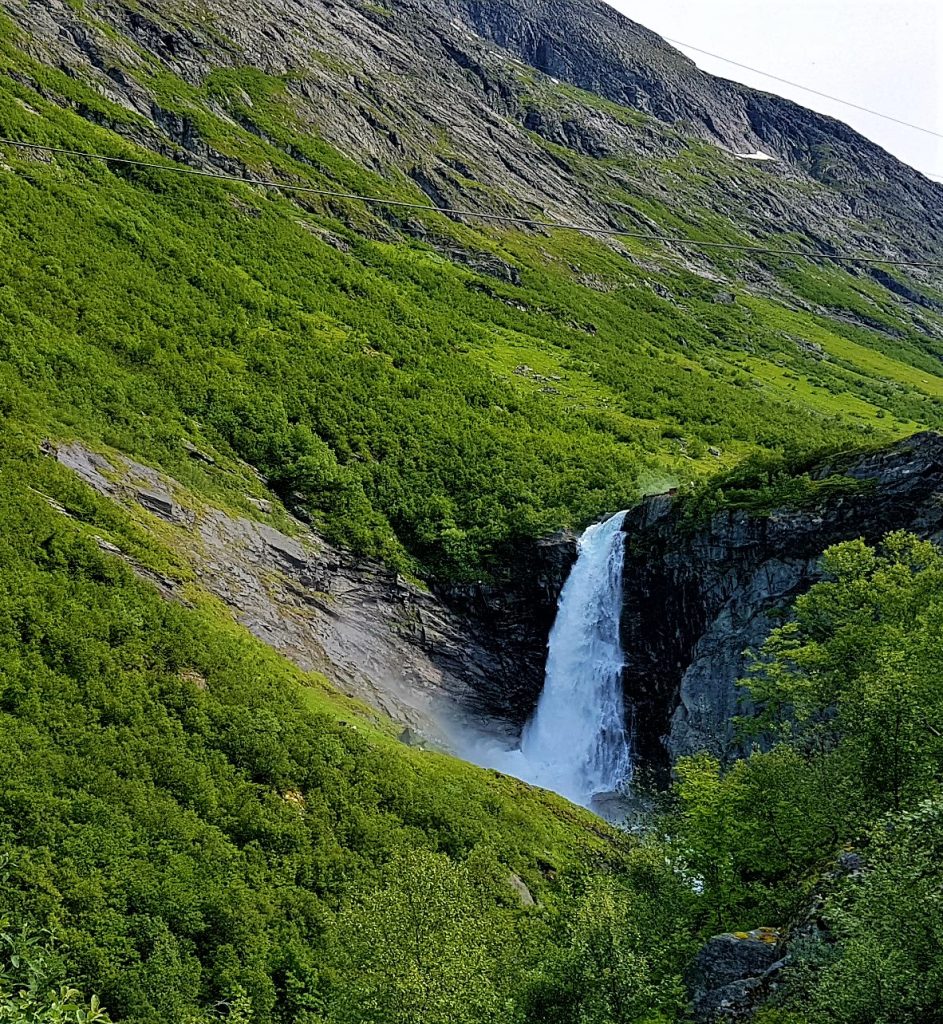
Here you also pass Videfossen, the waterfall rushing down the mountainside towards the valley – well worth a photo stop.
From here, continue down to Hjelle – the village where the old road originally began, at the jetty by Lake Oppstrynsvatnet. We parked by the jetty and took a short walk to the beach to look at the mountains surrounding Hjelle. It’s a small place, but well worth a short stop.
The drive from Hjelle along Oppstrynsvatnet towards Stryn is beautiful too, with high mountains rising on both sides of the lake.
Driving Gamle Strynefjellsvegen in a Campervan or Motorhome
Gamle Strynefjellsvegen is not for every vehicle. Vehicles longer than 8 meters, or with an axle load over 8 tons, are not allowed on the stretch from Grotli to the county border. The border lies near Stryn Summer Ski Centre, so the limit covers most of the mountain section. That rules out large motorhomes and caravans.
If your vehicle is within the limits, the drive is absolutely doable – but take it slowly. Much of the road is gravel, and in several places there’s only room for one vehicle. Use the meeting places, be ready to reverse a little, and give way generously.
If your motorhome is too large, take the new Strynefjell road (Rv15) instead. It runs through several long tunnels, but between them the scenery is majestic – and it’s open all year.
We drove the old road by car and have not taken our motorhome here yet, so the advice above is based on the official restrictions.
Practical Tips for Your Gamle Strynefjellsvegen Road Trip
- Season: The road usually opens in June and closes in October. Always check the road status at vegvesen.no before you go.
- Best time: Early summer for the dramatic snowbanks, midsummer for green mountains against white peaks, or autumn for the colors. We drove it in July.
- Weather: Snow can linger into July. Bring warm clothes, even in summer.
- Driving direction: Starting at Grotli gives you the descent and the fjord views as the grand finale.
- Fuel and charging: You can fill up along Rv15 at Nordberg, in Geiranger and in Hjelle. There is a charging station at Grotli.
- Overnight: The night before, we stayed at Dønfoss Camping, about half an hour’s drive from the start of the road. We have also stayed at Strynsvatn Camping, by the lake on the way to Stryn. Read my guide to wild camping in Norway for free overnight options.
- Mobile coverage: Generally good, but the signal can be weaker in some places. Download your maps before you go.
Useful Links
- National Scenic Routes – Gamle Strynefjellsvegen: nasjonaleturistveger.no/en/routes/gamle-strynefjellsvegen
- Road status and closures: vegvesen.no/trafikk
- Mountain weather forecast: yr.no
Combine Gamle Strynefjellsvegen with These Scenic Roads
Frequently Asked Questions About Gamle Strynefjellsvegen
When is Gamle Strynefjellsvegen open?
The road usually opens in June and closes in October. It is closed in winter. Check vegvesen.no for the current road status before you go.
Can you drive Gamle Strynefjellsvegen with a motorhome?
Only smaller ones. Vehicles over 8 meters long or with an axle load over 8 tons are not allowed from Grotli to the county border near Stryn Summer Ski Centre. Larger motorhomes and caravans should take the new Strynefjell road (Rv15) instead.
How long does it take to drive Gamle Strynefjellsvegen?
The 27 km stretch takes just under an hour without stops. Plan for 2–3 hours if you want time for the views.
Is Gamle Strynefjellsvegen a gravel road?
Yes, large parts of the road are gravel, and in several places there is only room for one car. Drive slowly and use the meeting places.
Is Gamle Strynefjellsvegen Worth the Drive?
We were really happy with our drive over the old Strynefjell road. Both the road and the nature were wild and beautiful, and the drive down towards the fjord gave us one of the best views I know in Norway.
I have only driven it once so far, but I would happily do it again. Next time maybe early in the summer, when the snow is still deep on the mountain – or in autumn, when the colors are at their best.
If you are driving between Lom and Stryn and your vehicle is within the limits, take the old road. It takes a little longer, but it is worth every minute.
Warm greetings from the road – Anne Bente

Planning a trip to Norway?
Get my road trip tips by email
Scenic routes, easy hikes and practical advice – from someone who drives these roads herself.
No spam, just Norway. Unsubscribe any time. Privacy Policy


One Comment
Pingback: