Norwegian Heritage: Historic Architecture to See on a Road Trip
On a road trip in Norway, you’ll find traces of Norwegian heritage all over the country. But what should you look for to recognize this cultural legacy?
When most people think of Norway, they picture dramatic fjords, towering mountains, and winding coastal roads. But one of the real surprises of such a journey is how often cultural heritage appears just outside your car window.
From stave churches and stone fortresses to fishing cabins and elegant wooden towns, Norway’s architecture tells stories of faith, trade, survival, and everyday life. Here are some of the most iconic types of old Norwegian heritage and architecture you’re likely to spot along the road.
1. Churches and Faith
Stave Churches (1130–1350) – A Unique Norwegian Heritage
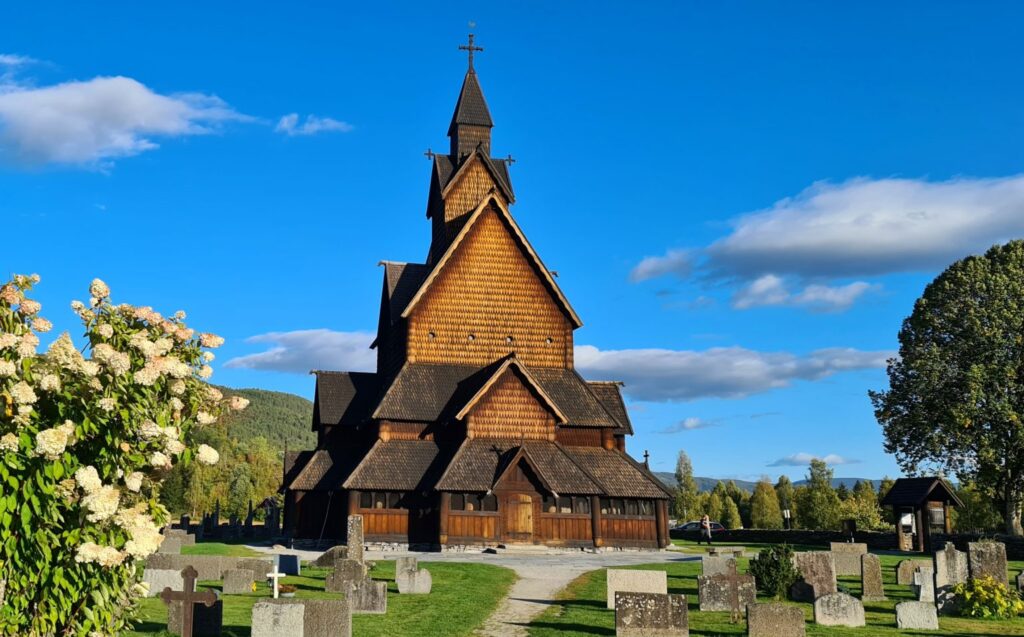
Norway’s stave churches are among its greatest treasures – and they are found nowhere else in the world. In the Middle Ages, around 1,000 stave churches were built across the country. Today, only 28 remain, all in Norway. These wooden masterpieces, with steep layered roofs, carved dragon heads, and rich symbolism, look straight out of a Viking saga. The most famous is Borgund Stave Church (around 1180), while Heddal (1250) is the largest. You’ll often spot them right along the main roads in valleys like Lærdal and Telemark.
Read more: Wikipedia – stave churches in Norway
Stone Churches (1100s–1200s) – Medieval Heritage in Stone
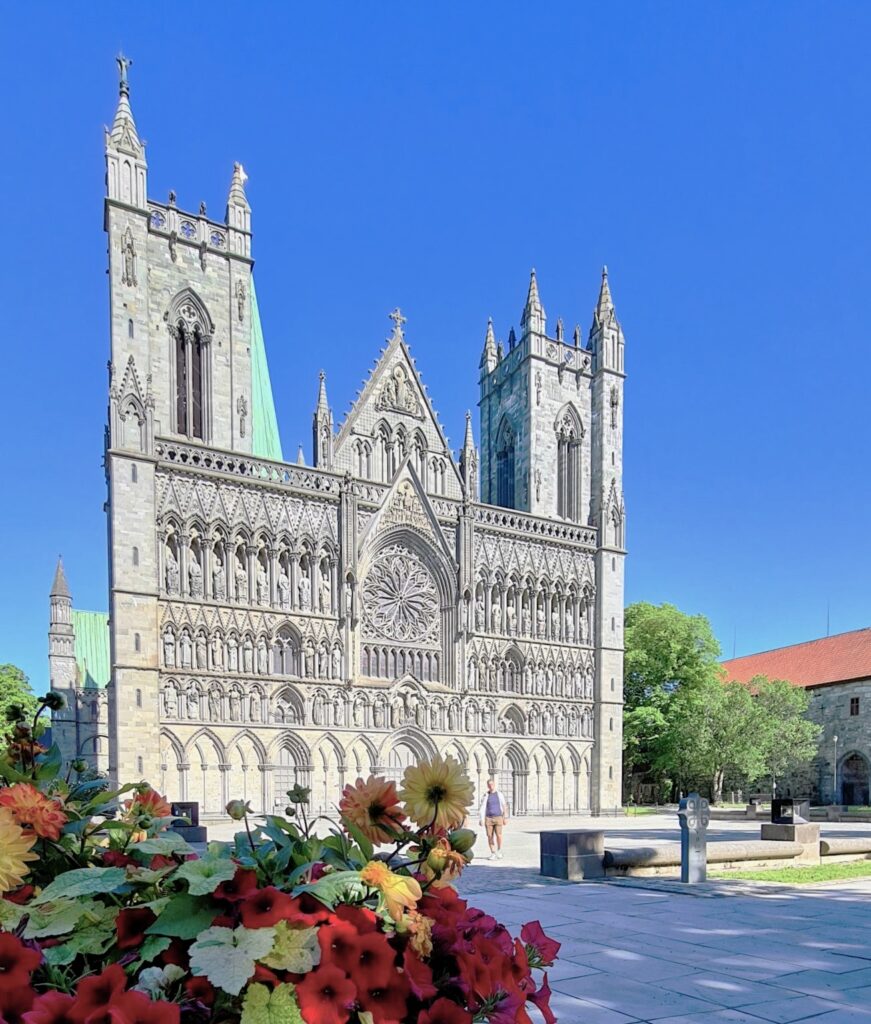
Alongside the stave churches, Norway also built sturdy Romanesque stone churches in the 1100s and 1200s. Nidaros Cathedral in Trondheim, begun in 1070, is the nation’s most important church, while smaller rural examples like Kinsarvik Church (around 1160) still serve their communities today. In the Larvik district, Hedrum Church (built around 1100–1150) is especially worth a stop – a massive stone church that has stood for more than 850 years as a landmark in the valley.
2. Fortresses, Castles & Manors in Norway
Fortresses (1200s–1600s) – Guardians of Norway’s Heritage
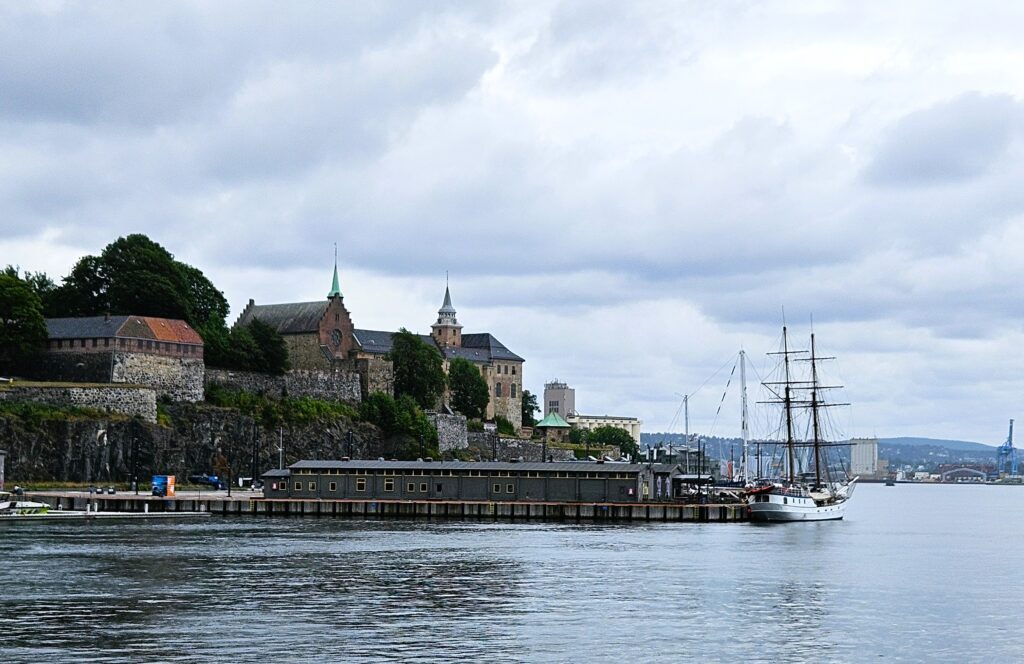
Norway’s coastal cities were fortified early. Akershus Fortress in Oslo (from 1299) still dominates the waterfront and has guarded the capital for over 700 years. In Bergen, Bergenhus Fortress dates back to the 1200s and includes Håkon’s Hall, a royal banquet hall from the mid-13th century. Driving past these landmarks, you sense Norway’s strategic importance in medieval Europe.
Historic Fortresses and Coastal Defenses in Norway
- Akershus Fortress (Oslo, 1299 →) – Medieval stronghold, royal castle, prison and still an active military site.
- Bergenhus Fortress (Bergen, 1200s) – With Håkon’s Hall (mid-13th century) and Rosenkrantz Tower.
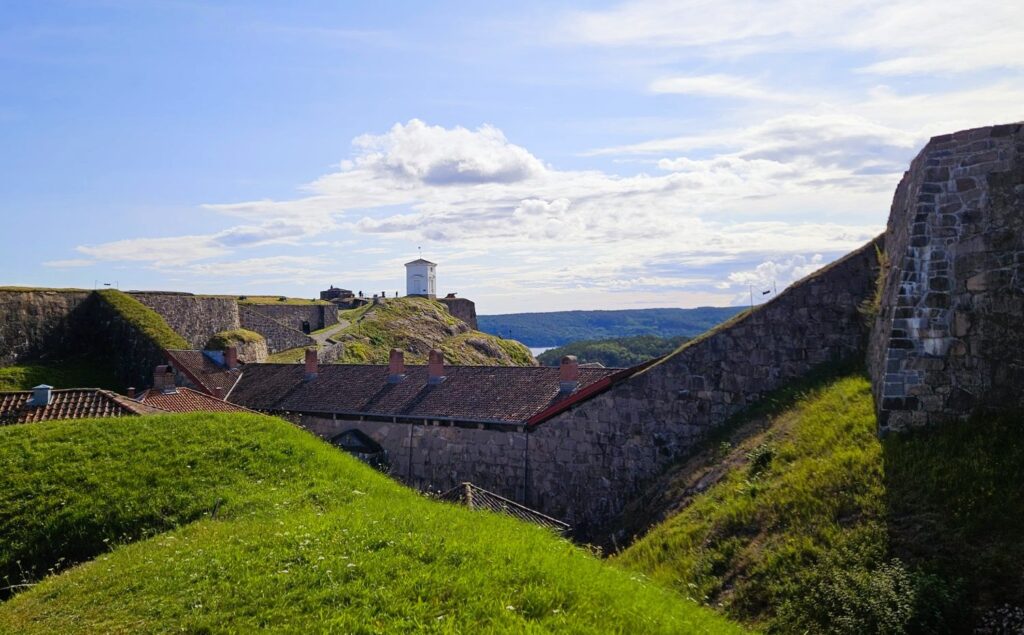
- Fredriksten Fortress (Halden, 1660s) – Famous for battles with Sweden and the death of King Karl XII in 1718.
- Fredrikstad Fortress (1567 →) – Northern Europe’s best-preserved star-shaped fortress town.
- Kongsvinger Fortress (1680s) – Key defensive point along the Glomma and towards Sweden.
- Oscarsborg Fortress (Drøbak, 1850s) – Known for sinking the German cruiser Blücher in 1940.
- Kristiansand Fortress (Christiansholm) (1670s) – A round seaside fort right in the city center.
- Vardøhus Fortress (Vardø, 1300s → rebuilt 1730s) – The world’s northernmost fortress.
- Fredriksvern (Stavern, 1750s) – Norway’s first permanent naval base, today a cultural site with historic buildings and museum.
Castles and Palaces (1600s–1800s)
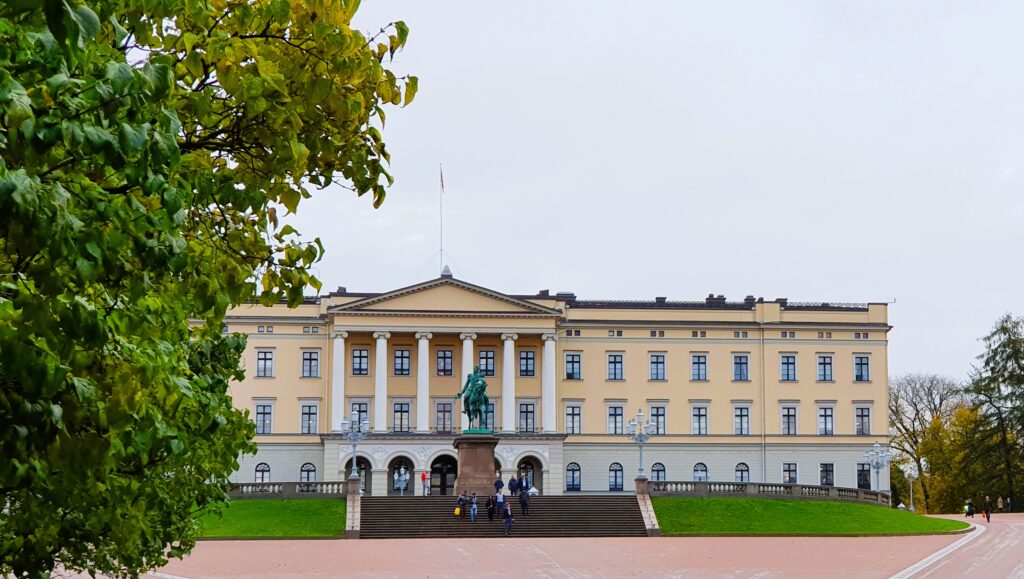
Norway never had the abundance of palaces seen elsewhere in Europe, but there are some gems. The Royal Palace in Oslo (1825–1849) crowns the capital’s main avenue, while Oscarshall (1847–1852) on Bygdøy is a romantic summer palace overlooking the fjord.
While Oslo has the Royal Palace and Oscarshall, some of Norway’s most remarkable manors and estates are scattered far from the capital. Tucked away in fjord villages, coastal towns, and even deep in the countryside, these historic residences often appear in the most surprising places – reminders of a time when power and wealth shaped the landscape as much as nature itself.
Historic Manors and Estates in Norway
- Baroniet Rosendal (Hardanger, 1660s) – Scandinavia’s only barony, surrounded by a beautiful Renaissance garden. Open to visitors with exhibitions, concerts, and guided tours.
- Austrått Manor (Ørland, Trøndelag) – Dating back to the Middle Ages, rebuilt in the Renaissance. Known for Lady Inger of Austrått, a powerful figure in Norwegian history.
- Herregården i Larvik (1677–1685) – Norway’s largest wooden baroque mansion, built by Ulrik Fredrik Gyldenløve as the seat of the County of Laurvig.
- Fritzøehus (Larvik, 1863–1868) – Neo-Renaissance castle/manor, Norway’s largest private estate, still owned by the Treschow family.
- Ulefos Hovedgaard (Ulefoss, Telemark, 1807) – Classicist manor built by Niels Aall, with elegant interiors and a museum today.
- Elingaard Manor (Fredrikstad, Østfold, 1749) – A Renaissance manor with a long history, now a museum.
- Bogstad Gård (Oslo, 1760s) – Once a summer residence for wealthy merchants, today a museum and cultural site.
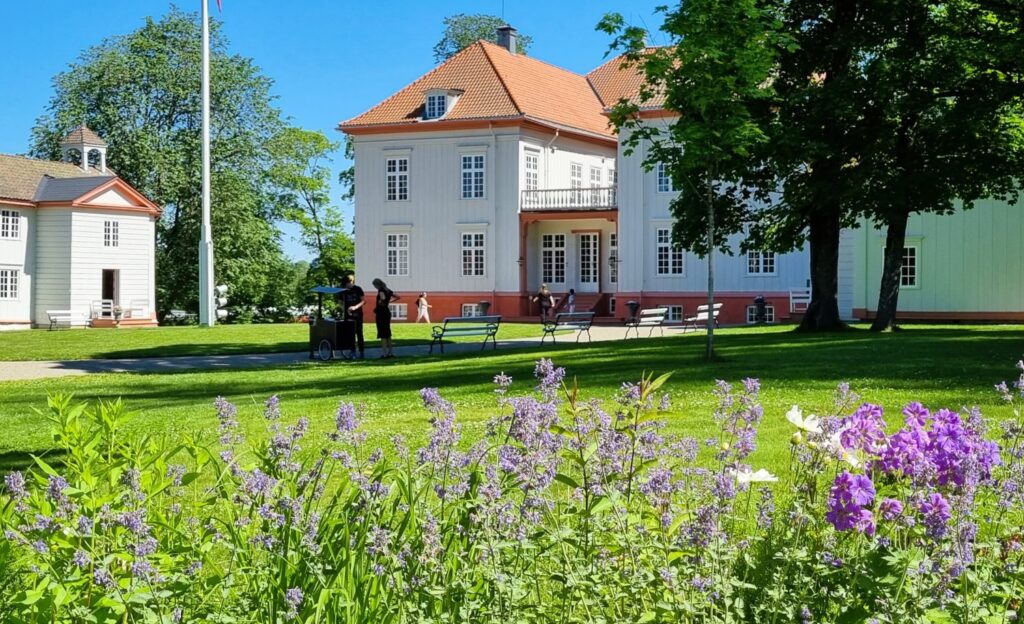
- Eidsvoll Manor (Akershus, 1770s, rebuilt) – Famous as the site of the signing of the Norwegian constitution in 1814.
- Stiftsgården (Trondheim, 1770s) – One of the largest wooden palaces in Scandinavia, built by a wealthy widow. Today it serves as the royal residence in Trondheim.
3. Coastal Life in Norway
Boat Houses (1700s–1800s)
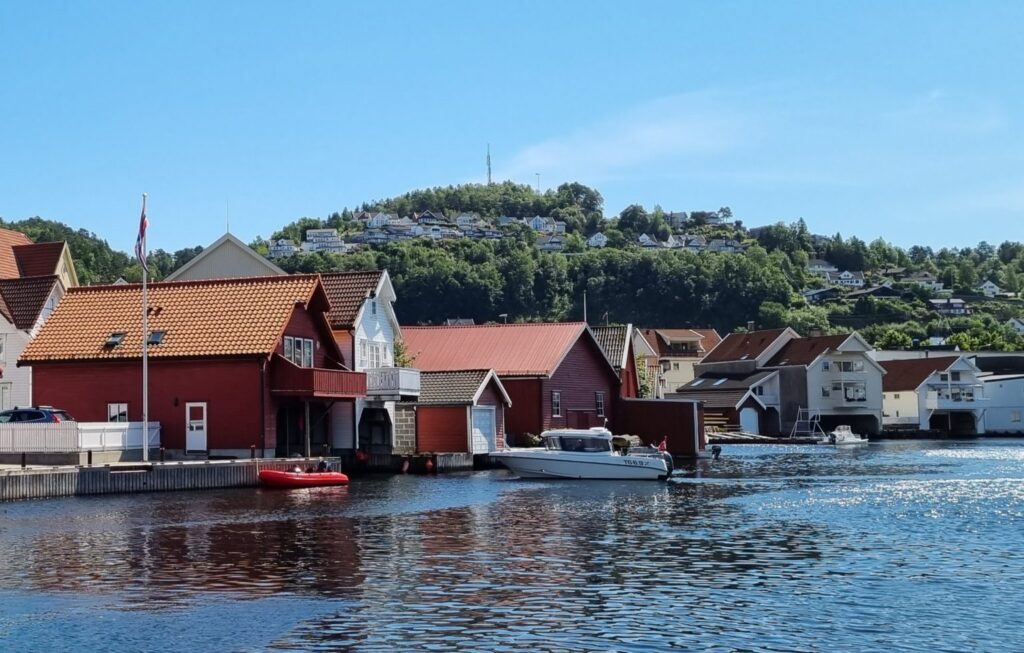
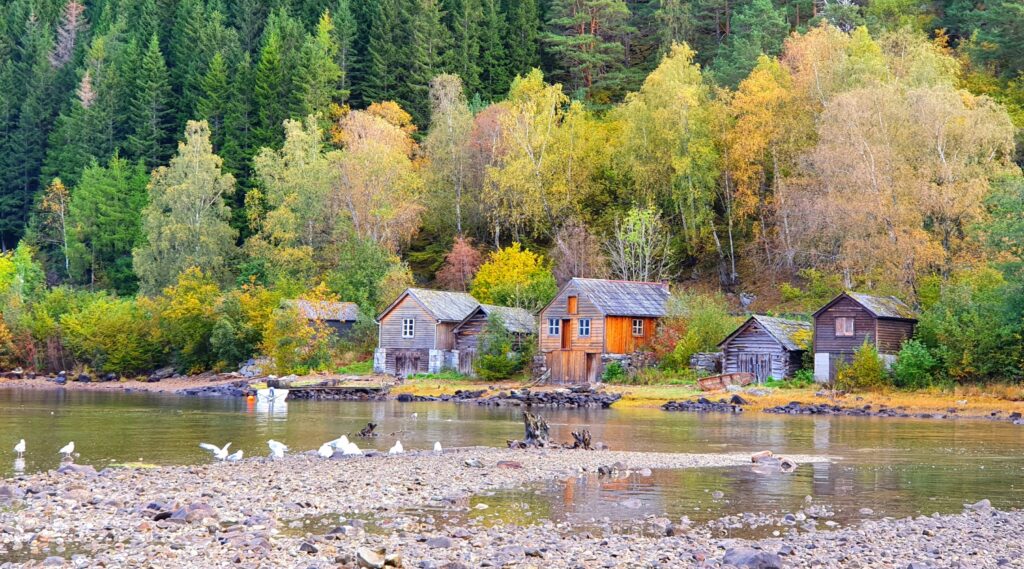
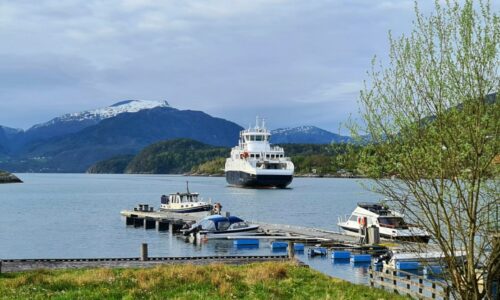
Along fjords and coastlines, you’ll often see rows of wooden boat houses right on the water’s edge. Built mainly in the 1700s and 1800s, they stored boats, nets, and fishing gear. The most picturesque can be found along the Hardangerfjord, in southern towns like Risør, Grimstad, and Flekkefjord, in Trondheim along the Nidelva river, and in Lofoten, where they stand alongside rorbuer. Their reflections in the water make for postcard-perfect moments.
Fishing Villages and Rorbuer (1100s–1800s)
In northern Norway, especially in Lofoten, you’ll see rorbuer – fishermen’s cabins first used in the 1100s. Most of the surviving ones date from the 1800s. Once housing seasonal cod fishermen, many are now renovated as cozy rentals for travelers. Their bright red walls against rugged mountains are among the most iconic images of coastal Norway.
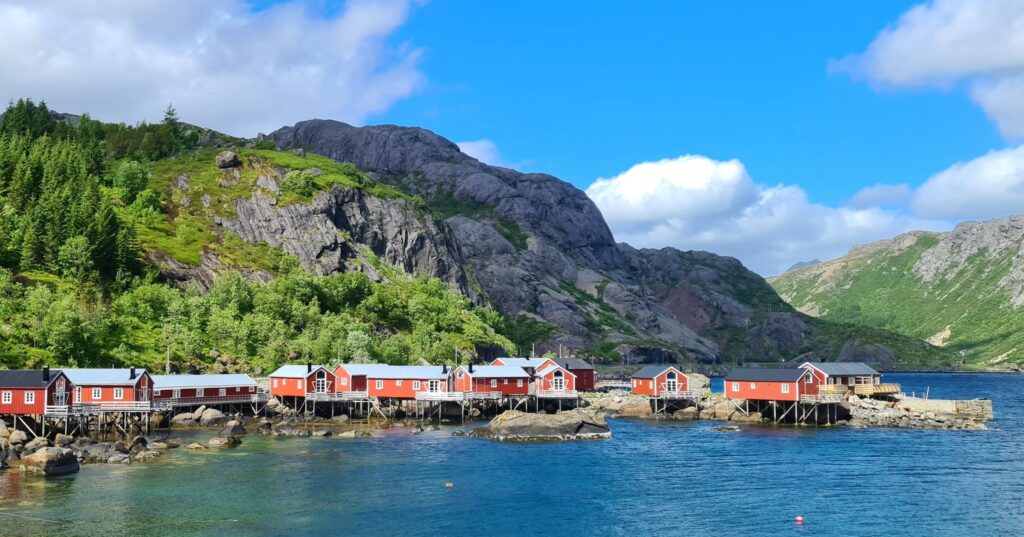
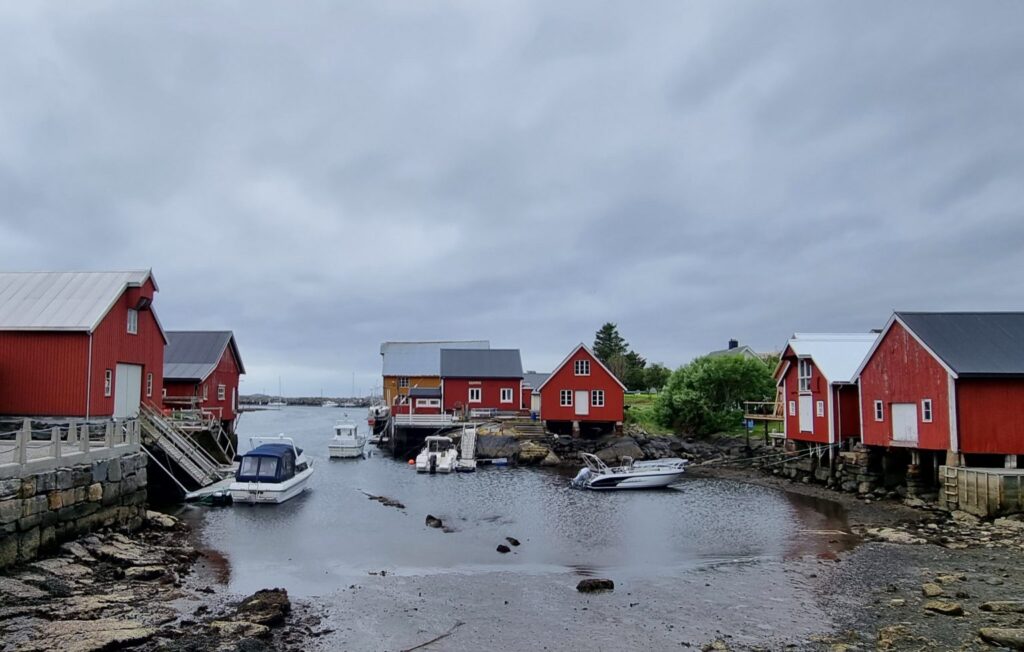
✨ Even though Lofoten is world-famous for its rorbuer, Norway’s coastline is dotted with countless other fishing villages worth a visit. From Nevlunghavn and Lyngør in the south to Honningsvåg in the far north, these communities tell the story of a nation built on the sea. Some are still working harbors, others preserved as living museums, but all of them offer a glimpse of authentic coastal life.
12 Fishing Villages You Shouldn’t Miss
- Reine (Lofoten, Nordland) – The postcard-perfect fishing village, surrounded by towering peaks.
- Nusfjord (Lofoten, Nordland) – One of Norway’s oldest and best-preserved fishing villages, a UNESCO candidate.
- Å i Lofoten (Nordland) – A living museum at the end of the E10, with rorbuer and cod-drying racks.
- Henningsvær (Lofoten, Nordland) – Known as “the Venice of Lofoten,” lively with art, cafés and fishing traditions.
- Kjerringøy (near Bodø, Nordland) – Historic trading post and fishing settlement, full of atmosphere.
- Vega Islands (Nordland, UNESCO) – Famous for its mix of fishing and eider farming, with boathouses and rorbuer.
- Kalvåg (Bremanger, Vestland) – One of Western Norway’s best-preserved fishing villages, with rorbuer along the harbor.
- Bud (Møre og Romsdal) – Historic fishing village and trading post, once Norway’s largest in the 16th century.
- Nevlunghavn (Vestfold, Sørlandet) – A charming fishing harbor with white wooden houses, easy to reach by road.
- Lyngør (Agder, Sørlandet) – A car-free island community, once a busy fishing and sailing harbor, now a protected wooden village.
- Ny-Hellesund (Agder, Sørlandet) – Historic outport and fishing settlement, accessible by boat, with preserved coastal houses.
- Honningsvåg (Finnmark) – Norway’s northernmost town, still centered on fishing, and gateway to Nordkapp.
4. Towns & Cities
White Wooden Towns (1700s–1800s)
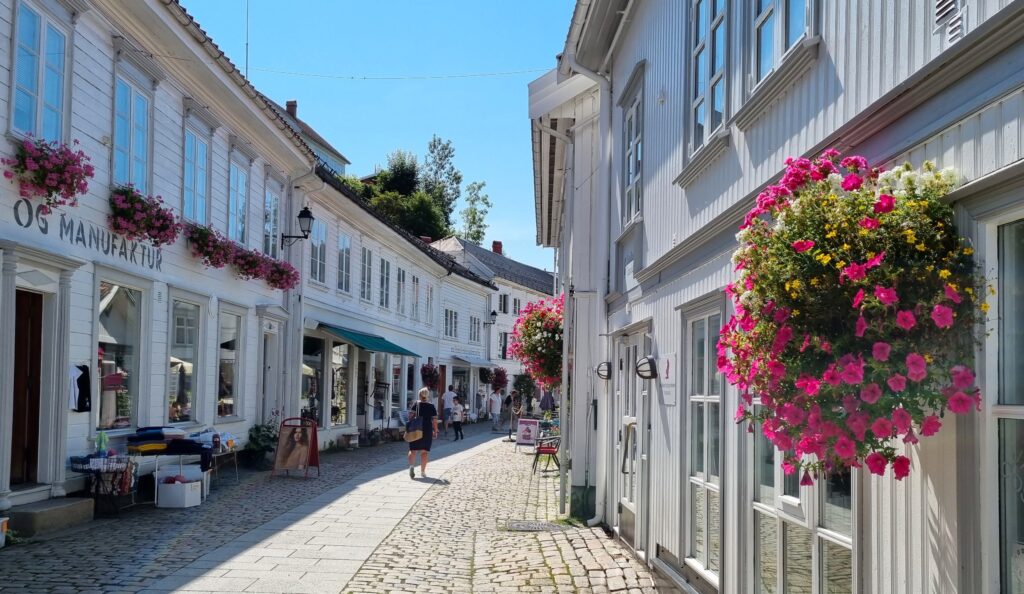
Southern Norway is dotted with charming white-painted wooden towns. Risør, Grimstad, Tvedestrand, Mandal, and Lillesand are some of the best-preserved examples. In Stavanger, the Old Town (Gamle Stavanger) holds over 170 wooden houses from the late 1700s and 1800s, making it the largest surviving wooden town in northern Europe. Strolling these narrow cobbled streets feels like time travel.
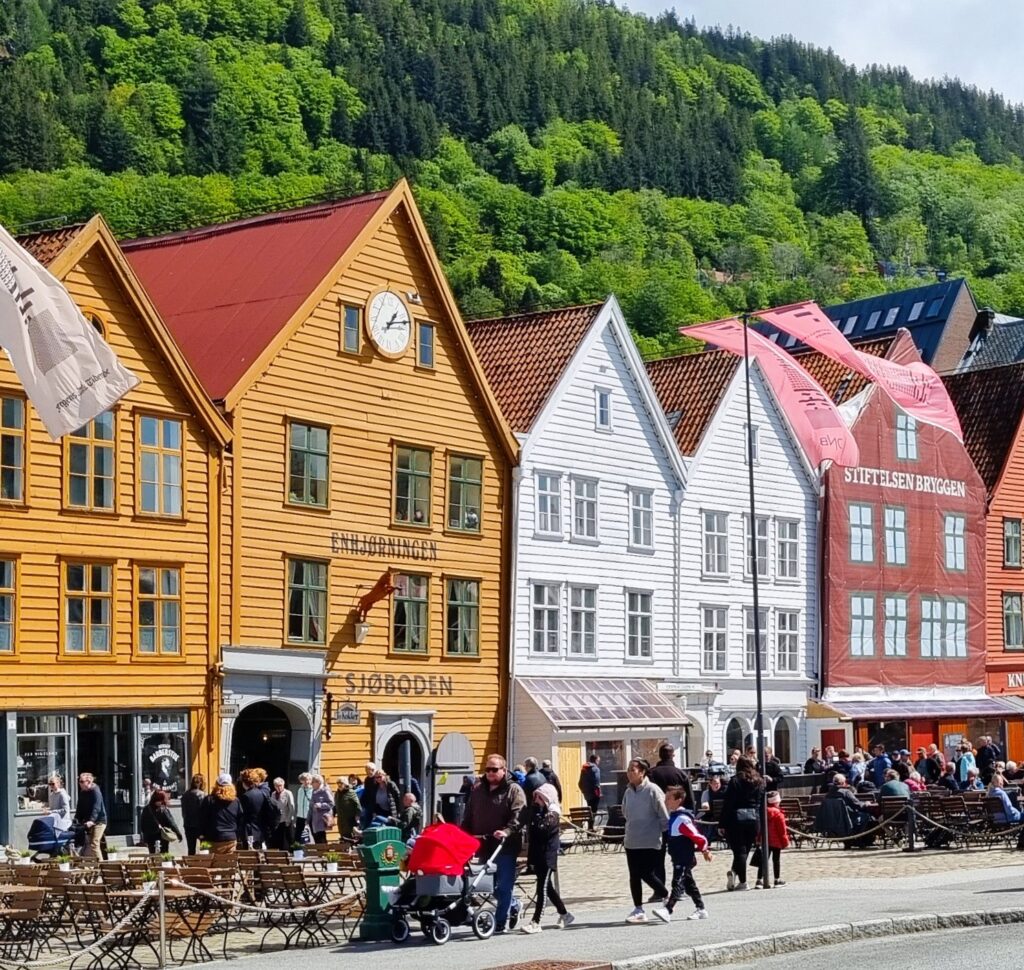
Bergen – Bryggen in Bergen (from the 1300s, rebuilt 1702)
Bryggen, the Hanseatic Wharf, is Bergen’s pride and a UNESCO World Heritage site. Originally a trading hub from the 1300s, the colorful wooden warehouses you see today were rebuilt after the devastating fire of 1702. They lean charmingly towards each other, a reminder of centuries of trade, and still buzz with shops and cafés.
Beyond Bryggen, Bergen itself is a city of wooden architecture. Nestled between seven mountains, it has grown around its wooden core since medieval times, and despite fires, much of its historic charm remains. For many travelers, Bergen is both a cultural capital and an open-air museum of Norwegian building traditions.
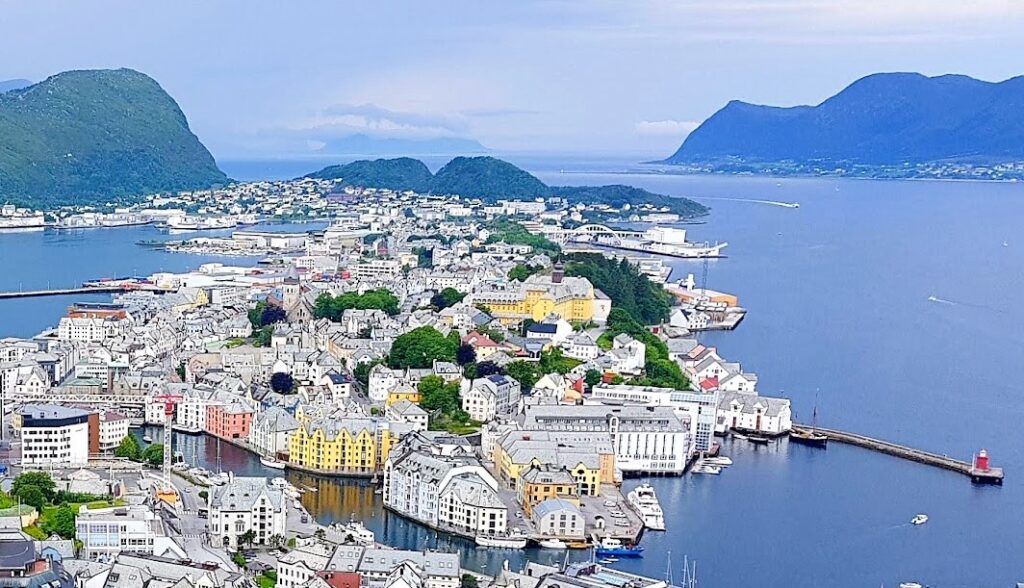
Ålesund – Art Nouveau Gem (1904)
After a devastating fire in 1904, Ålesund was completely rebuilt in the Art Nouveau style. Colorful stone and plaster buildings with towers, turrets, and floral details make it Norway’s most unique architectural town. From the Aksla viewpoint, you can see the harmonious design stretching across islands into the sea.
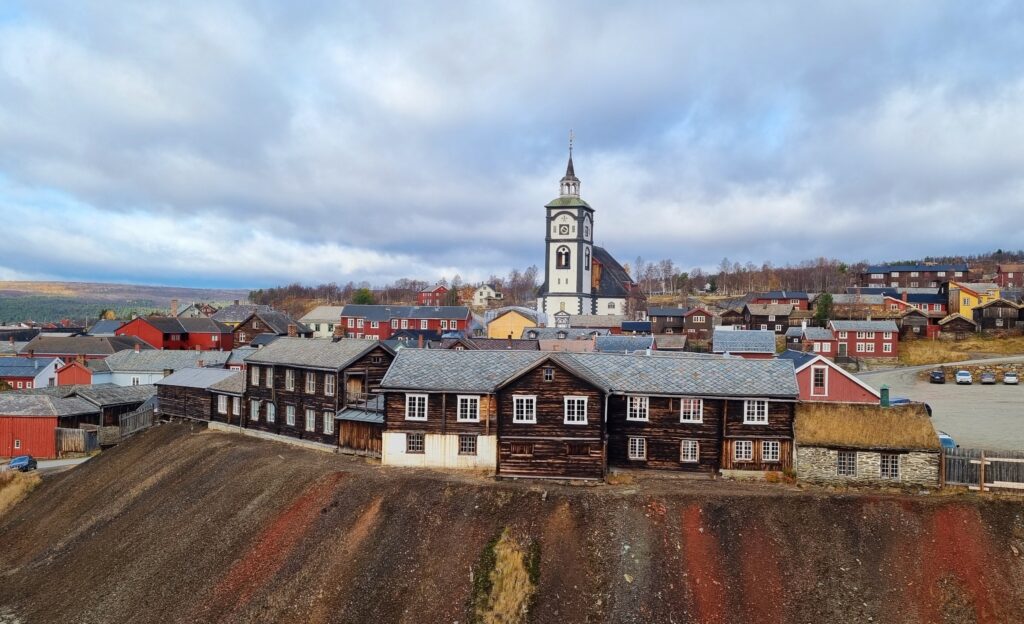
Røros – Mining Heritage (founded 1644)
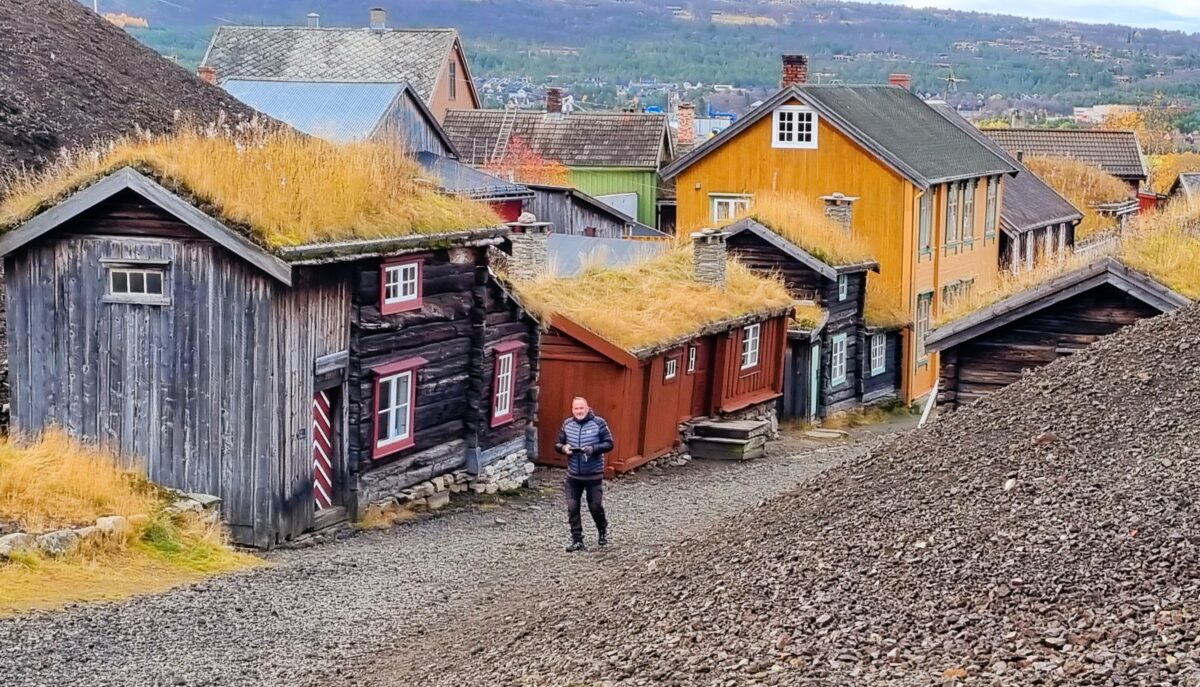
Røros, a UNESCO World Heritage site, is a former copper mining town founded in 1644. Its dark wooden houses, narrow streets, and the impressive Røros Church (1784) make it a living museum. Visiting Røros feels like stepping into a preserved 17th-century town.
And beyond the famous names, you’ll find smaller gems where history still lives in the streets.
Other Historic Towns and Villages
- Lærdalsøyri (Vestland) – Nestled at the end of the Sognefjord, this old trading village has more than 170 wooden houses from the 1700s and 1800s, many in Swiss chalet style. It’s one of the best-preserved wooden settlements in Western Norway.
- Skudeneshavn (Rogaland) – Known as one of Norway’s best-preserved sailing towns, with over 100 white wooden houses from the 1800s lining narrow lanes by the sea.
- Mosjøen (Nordland) – Home to Sjøgata, a long street of 19th-century wooden houses and boathouses, making it one of the most atmospheric small towns in Northern Norway.
- Bakklandet (Trondheim) – Colorful wooden houses on stilts along the Nidelva river, connected by cobbled lanes and small cafés – a charming historic district in the middle of a larger city.
- Lom (Innlandet) – A mountain village famous for its stave church (around 1158) and traditional Gudbrandsdal architecture. Old farmhouses, turf roofs, and the Presthaugen open-air museum give Lom the feel of a living showcase of rural Norway.
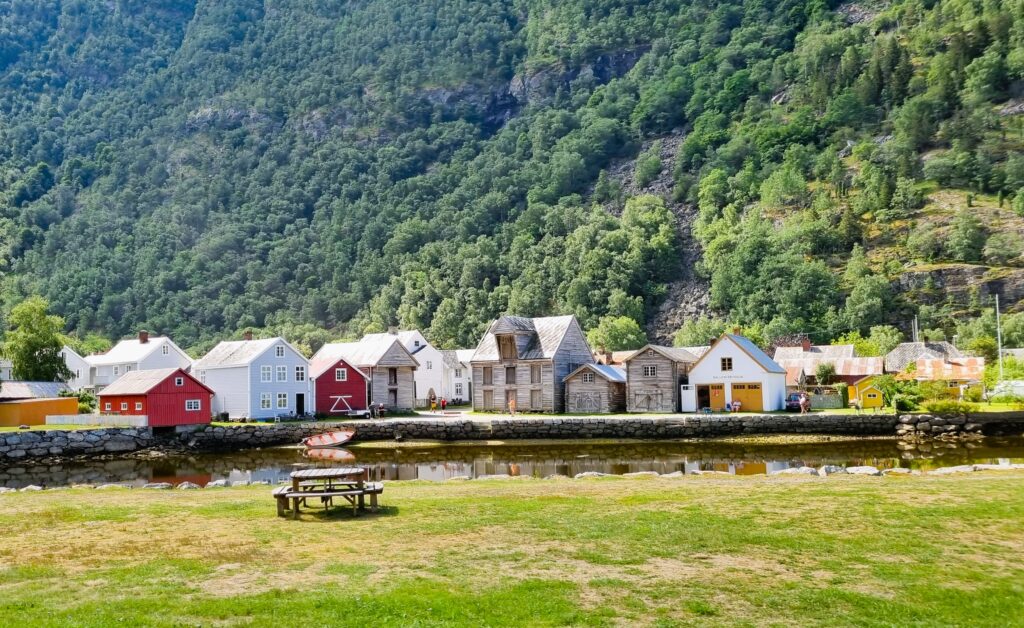
Each of these places offers something a little different – from fjordside trading posts to mountain villages – but all share the same sense of stepping back in time.
5. Rural Traditions
Turf Roofs and Farmsteads (Viking Age–1800s)
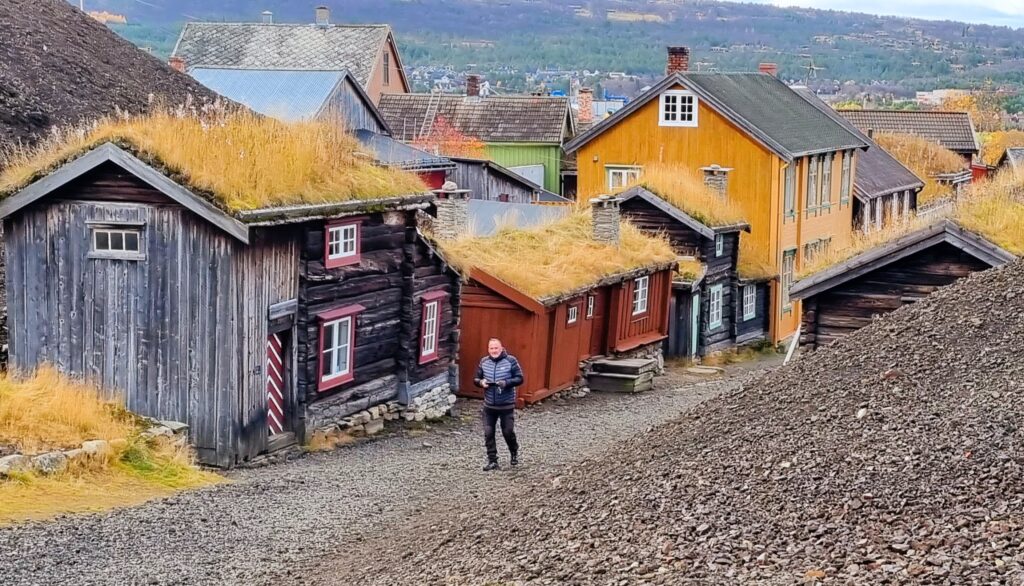
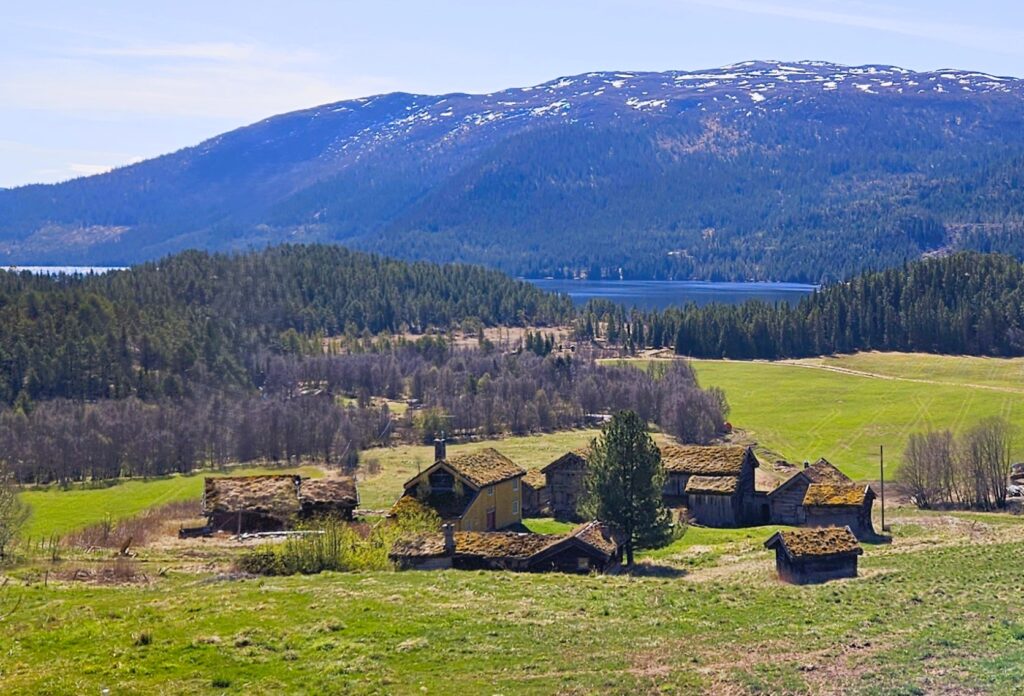
All across Norway’s valleys – from Gudbrandsdalen and Valdres to Hallingdal, Telemark, Setesdal and even up north in Nordland and Troms – you’ll see clusters of old log houses with turf roofs. This building style dates back to the Viking Age and remained common until the 1800s, offering natural insulation and harmony with the landscape. The thick layers of earth and grass kept the houses warm in winter and cool in summer, while also blending them seamlessly into the surrounding fields and mountains.
Stabbur (1600s–1800s)
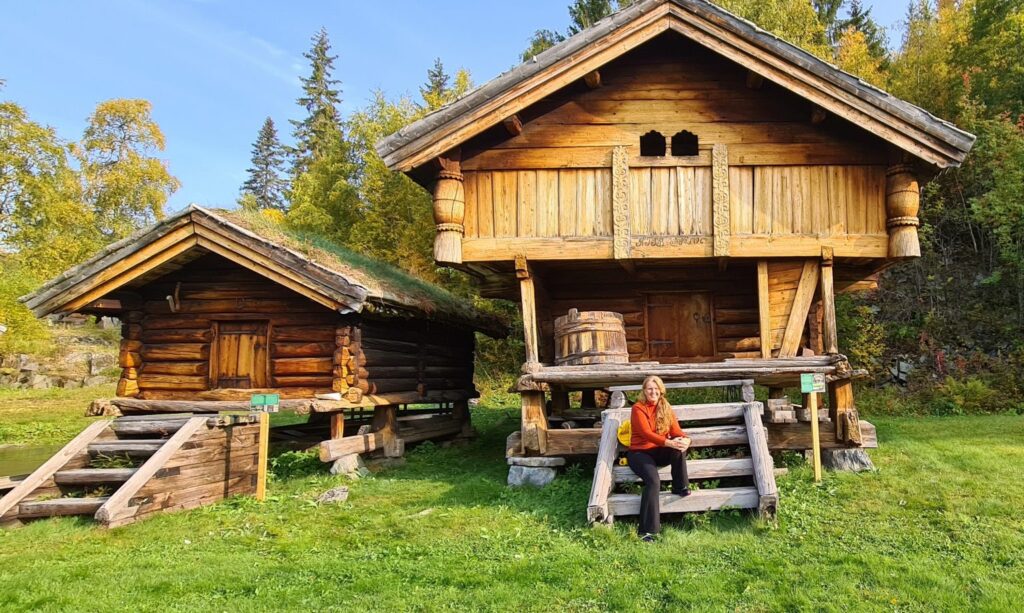
Raised storehouses called stabbur are a classic sight on Norwegian farms. Built on stone pillars to keep food dry and safe from mice, they often feature carved wooden details and traditional red paint. Most of the stabbur you see today date from the 1600s–1800s, but the tradition is older.
✨ Fun fact: Some of these charming little buildings have been converted into cozy cabins and are now rented out to travelers – letting you experience a night in a piece of Norwegian farm history.
Red Barns (from late 1800s)
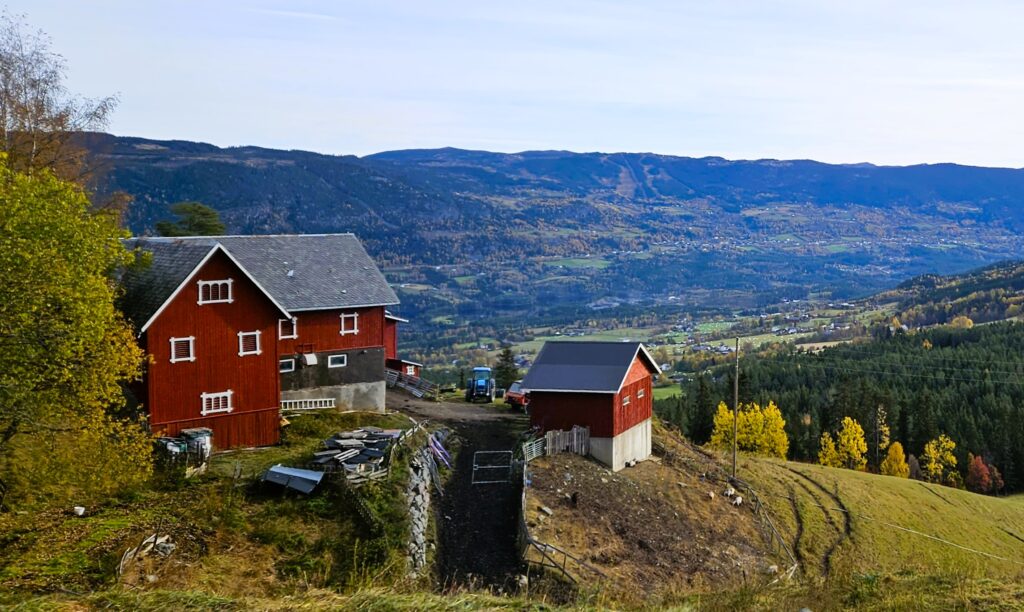
No drive through rural Norway is complete without spotting large red barns. The paint, made from iron oxide, became affordable in the late 1800s and symbolized prosperity. Together with white farmhouses, red barns form one of Norway’s most iconic roadside images.
Small Cabins and Hay Barns (1700s–1800s)
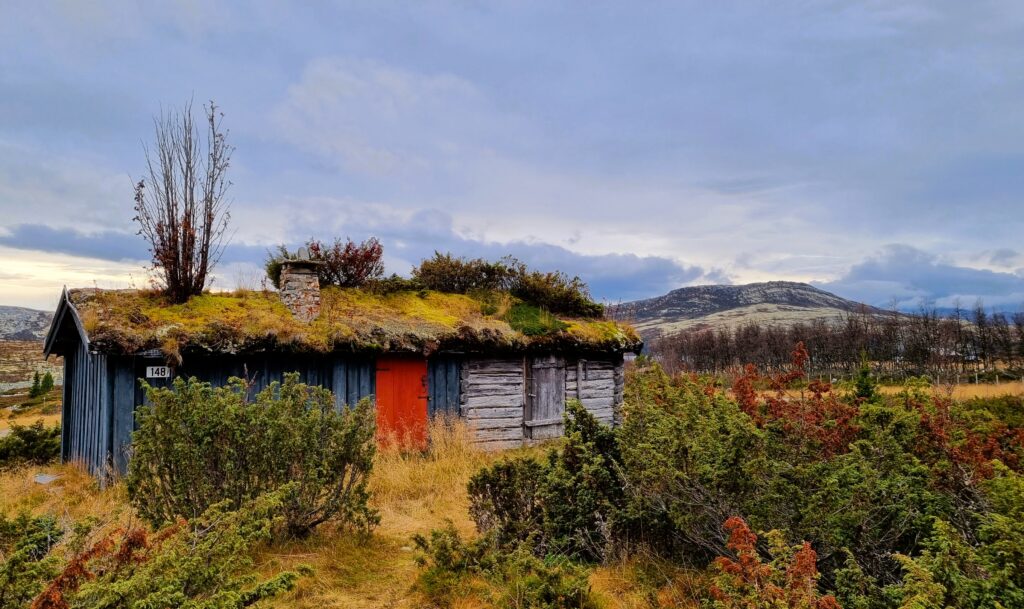
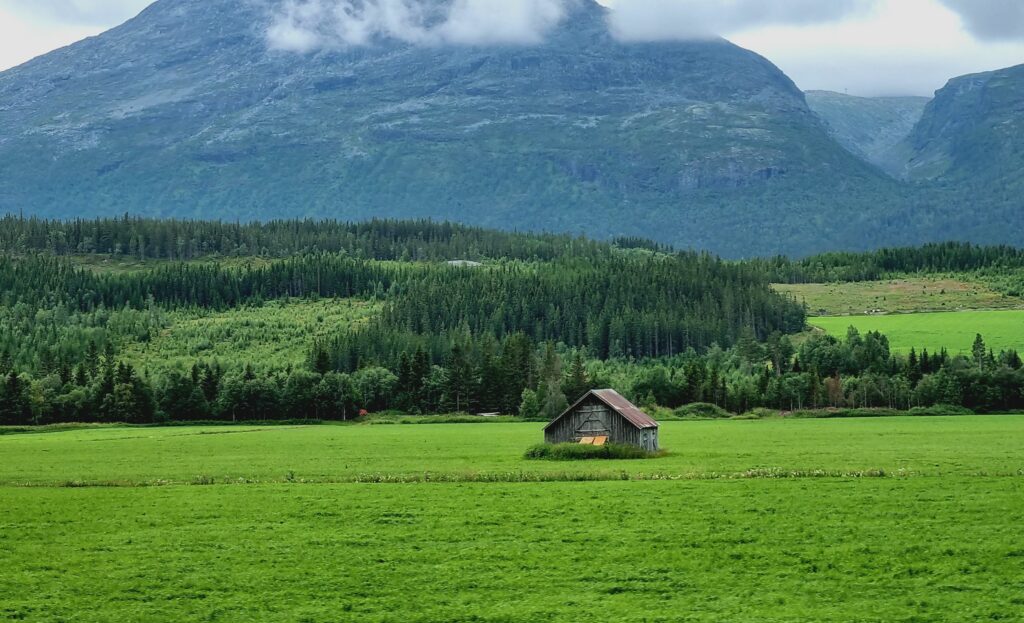
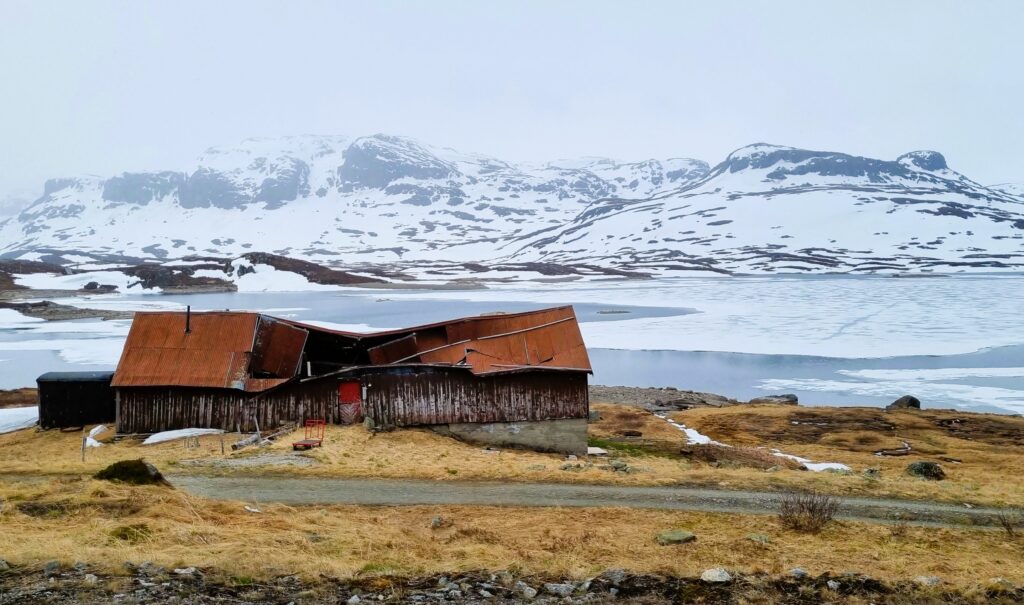
In meadows and valleys, you’ll see tiny wooden huts or hay barns. Built mainly in the 1700s and 1800s, they were used to store hay or as shelters during the harvest. Many of them have long since been abandoned and left to nature. Over time, roofs sprout small trees, walls lean at odd angles, and the buildings seem to be balancing on the edge of collapse.
Far from being an eyesore, the slow decay often has a certain beauty – a quiet, almost poetic reminder of hard-working farm life now reclaimed by the landscape.
Seter Culture – Summer Farms (Middle Ages–1900s)
In summer, farmers traditionally sent livestock to mountain pastures. This created seter farms – clusters of simple wooden cabins used by milkmaids and herders. The tradition dates back to the Middle Ages and remained vital until the 1900s. Many seter farms survive in regions like Valdres, Gudbrandsdalen, Telemark, and Western Norway, some dating back to the 1700s.
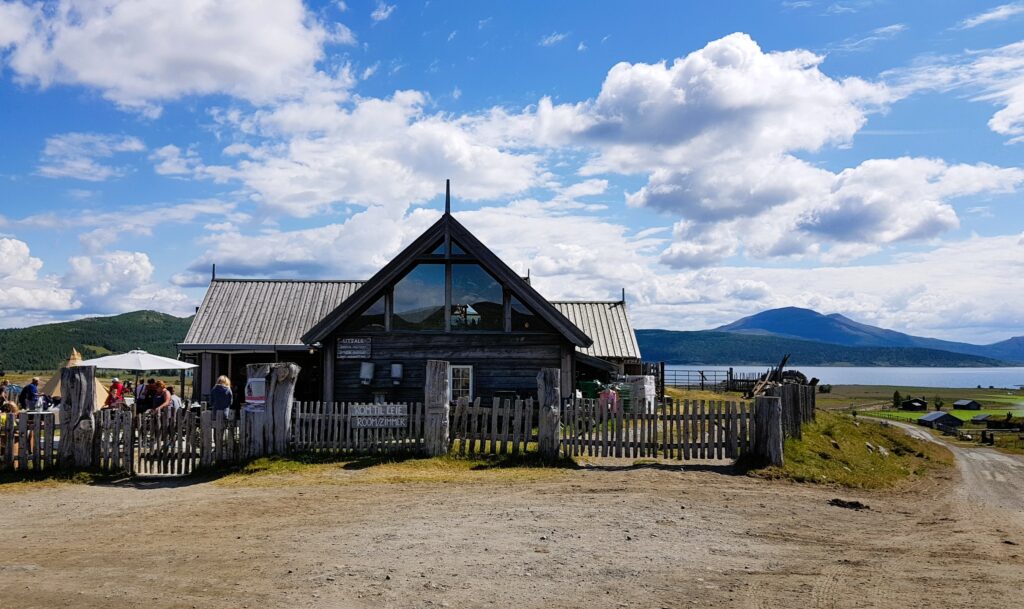
Seter Farms Worth Visiting
Even today, a few seter farms are still alive and open to visitors. Here you can step straight into a centuries-old rhythm of life, taste homemade dairy products, and watch cows, sheep, and goats grazing freely around the yard. For many travelers, it’s a rare chance to experience traditional Norway with all the senses.
- Selstali Seter (Rjukan, Telemark) – A cozy and family-friendly summer farm at the foot of Gaustatoppen. Here you can enjoy waffles, rømmegrøt, and homemade butter while sheep, cows, chickens, and hens wander freely around the yard.
- Brimi Sæter (Lom, Jotunheimen) – One of Norway’s most famous summer farms. Visitors can taste traditional dairy products, try hearty mountain meals, and see cheese and butter being made the old-fashioned way.
- Lisjestølen (Stryn, Vestland) – A charming mountain seter where you can sit down for rømmegrøt, homemade pastries, and meet goats grazing in the lush surroundings of Nordfjord.
These are just a few examples – there are many more seter farms across the country where the old tradition is still alive. Stumbling upon one on your road trip can be an unexpected highlight.
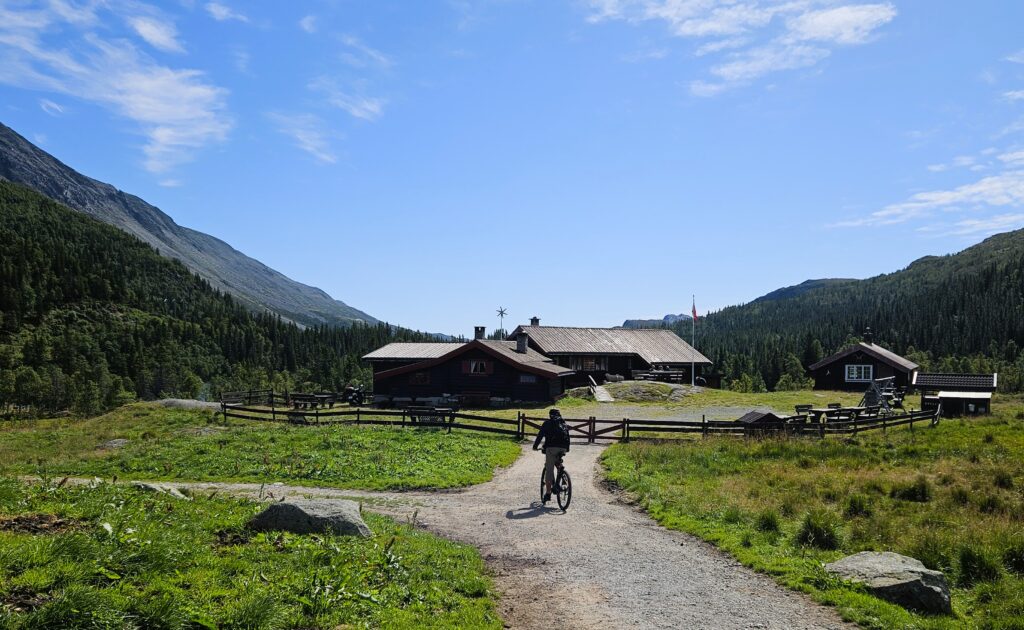
Mountain Lodges – Fjellstuer
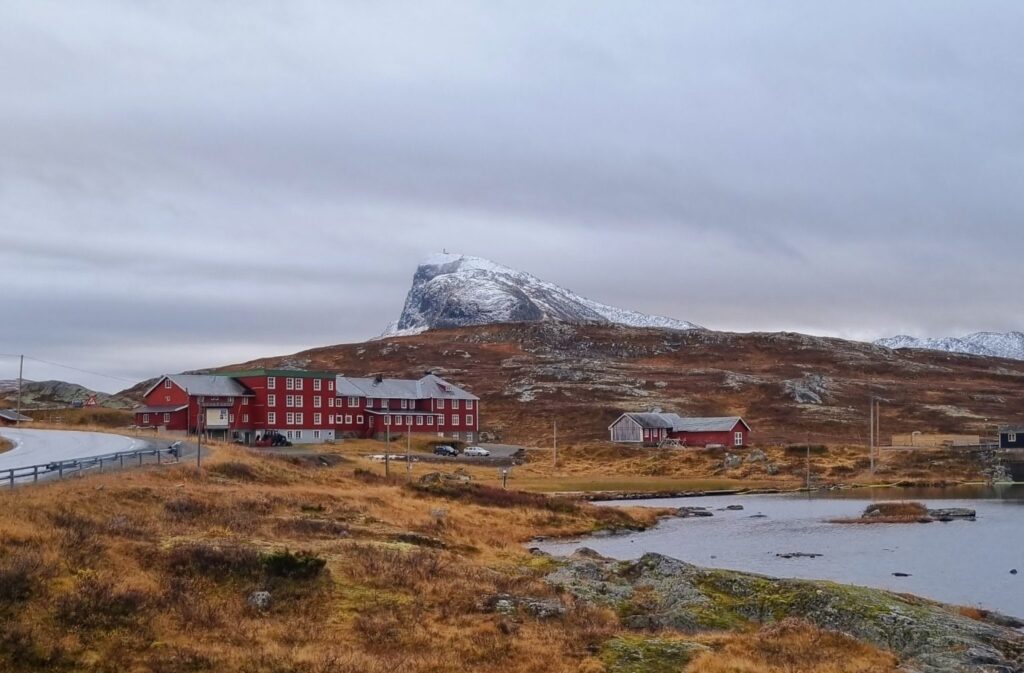
Crossing Norway’s mountain plateaus has always been a challenge, and since the Middle Ages travelers relied on fjellstuer – simple mountain lodges offering food, shelter, and fresh horses. Some of these have survived and evolved into today’s mountain hotels, keeping the tradition alive in new ways.
- Kongsvold Fjeldstue (Dovrefjell) – with roots back to the 1100s, one of Norway’s oldest mountain inns.
- Filefjellstuene – important stops along the old King’s Road across Filefjell.
- Bygdin Fjellhotell (Jotunheimen) – once a mountain lodge by Lake Bygdin, today a hotel and hiking hub with views towards the peaks of Jotunheimen.
These places show how Norway’s harsh mountain crossings shaped a tradition of hospitality that still welcomes travelers today.
6. Living Norwegian Traditions
Historic Hotels – Sleeping in Norwegian Heritage
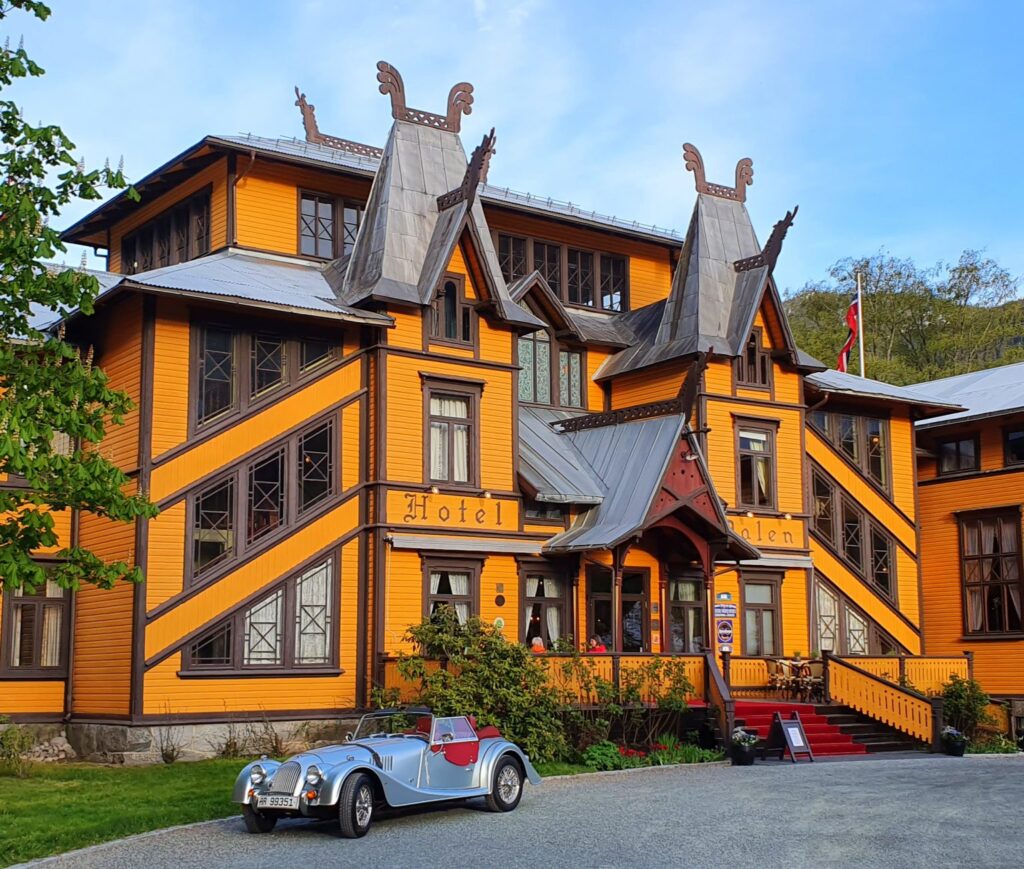
As tourism blossomed in the 1800s, elegant wooden hotels were built to welcome visitors to the fjords and mountains. These grand buildings, often in Swiss chalet or dragon style, offered both comfort and romance for travelers exploring Norway’s wild landscapes.
- Hotel Union Øye (1891, Sunnmøre) – Hosted kings, explorers and writers, and still retains its 19th-century charm.
- Fleischer’s Hotel (1889, Voss) – A hub for early railway travelers and a classic stop on the way to the fjords.
- Dalen Hotel (1894, Telemark) – Nicknamed “the fairy-tale hotel”, this wooden masterpiece with turrets and dragon heads is one of Norway’s most remarkable historic hotels.
Many of these hotels still operate today, letting you sleep in living history – surrounded by creaking staircases, chandeliers, and mountain views. And these three are just a few examples; scattered across the country, you’ll find more hidden gems that carry the golden age of travel into the present.
Norway’s Cabin Culture (1900s–today)
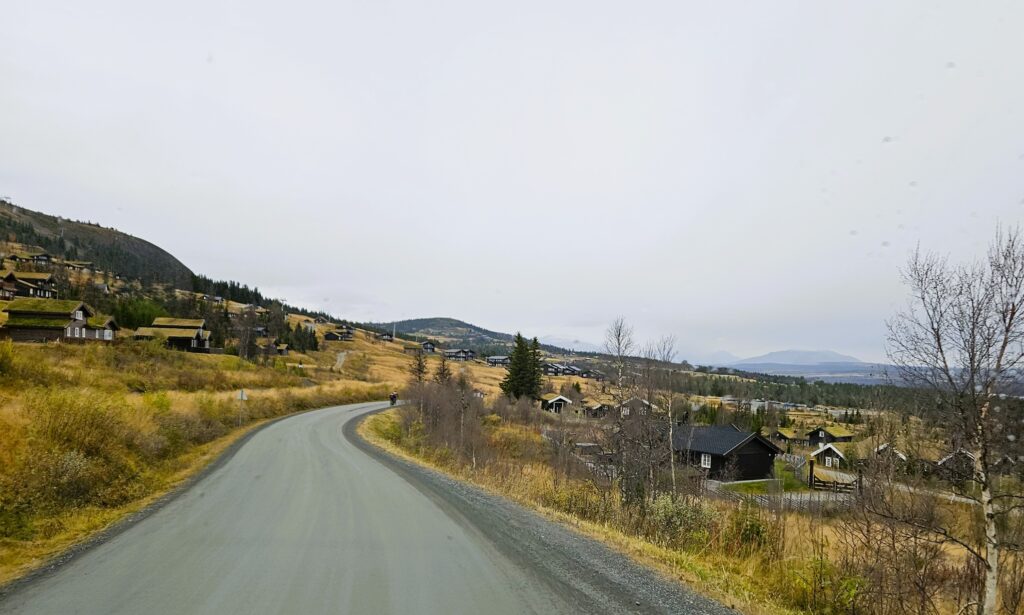
Cabins, or hytter, are a modern continuation of Norway’s love for nature. What began as simple log huts for hunters or farmers grew into a nationwide tradition. Today there are about 451,000 cabins – roughly one for every six households.
You’ll find them everywhere: summer cabins by the sea, ski cabins in alpine resorts, and remote mountain huts so isolated that you have to hike in to reach them. Some are rustic with no electricity or running water, while others are sleek glass-and-wood masterpieces with all modern comforts. But whether simple or luxurious, they all reflect the same idea: the Norwegian need to “escape to nature.
Fun fact: Almost every Norwegian has been on a cabin trip – either to their own family cabin, a friend’s, or one borrowed through work. Many companies even keep cabins their employees can use. A hyttetur means more than just a weekend away: it’s about crackling fires, board games, hearty food, and long walks in nature – a tradition deeply woven into everyday Norwegian life.
Sami Architecture
In the north, the indigenous Sami people developed their own building styles. Gammes, turf-covered huts, provided shelter against Arctic winters, while lavvu tents are still used during reindeer herding.
And Sami culture is not only found in the far north – on mountain plateaus like Hardangervidda or in areas around Røros, travelers may also encounter reindeer herding and traditional lavvu camps. Seeing them reminds visitors that Norway’s cultural landscape is not only Norwegian, but also Sami.
A Living Norwegian Heritage Along the Road
What makes Norwegian architecture so special is how alive it still feels. These aren’t just monuments – many of the old houses, barns, hotels, and even castles are still in use today.
On a road trip, you constantly see the blend of past and present: turf roofs and Tesla chargers, medieval fortresses and modern highways. It’s this contrast that makes driving through Norway not only a journey through nature, but also a journey through history.
Travel tip: Don’t just stop at viewpoints. Take time to wander through a stave church, stroll past boat houses in a fishing village, or book a night at a historic hotel. The architecture you’ll pass on the road is part of what makes Norway unforgettable.
Thanks for joining me on this little tour through Norway’s architectural heritage 💙 I hope it gives you inspiration for your own journey.
Happy road tripping,
Anne Bente

Have you spotted some of these treasures on your own travels in Norway? Share your favorite experience in the comments – and if you enjoyed this article, feel free to pass it along to a fellow traveler who dreams of exploring Norway.



3 Comments
Pingback:
Pingback:
Pingback: