
Flåm Railway and Cycling – Ride the Famous Train or Cycle Back from Myrdal
The Flåm Railway starts right at the fjord in Flåm and climbs 863 meters to the high mountain station at Myrdal over just 20 kilometers. That alone explains why this journey is considered one of the most spectacular train rides in the world.
In less than one hour, you travel from dramatic fjord scenery to open mountain landscapes, passing waterfalls, rivers, steep valley walls,and an engineering masterpiece that continues to impress, decades after it was completed.
This is more than transportation. It’s an experience.
This guide covers both ways to experience the Flåm Railway – the classic round-trip train journey and the popular option of taking the train to Myrdal and cycling back through Flåmsdalen.
The Story Behind the Flåm Railway
The Flåm Railway was built to connect the Bergen Railway at Myrdal with the fjord at Flåm. Construction took place between 1923 and 1940, and the challenge was immense: climbing 863 meters in elevation over just 20 kilometers.
With an average gradient of 5.5% – and up to 5.9% at its steepest – the Flåm Railway remains one of the steepest standard-gauge railway lines in the world.
Much of the work was done by hand. Workers blasted through solid rock, built tunnels and bridges under extreme conditions, using little more than dynamite, shovels, and determination. A total of 20 tunnels were constructed, many without the help of modern machinery.
As you sit on the train today, it’s easy to be overwhelmed by the scenery – but the railway itself is just as much a part of the experience.
The Flåm Railway Journey – What You See When Starting from Flåm
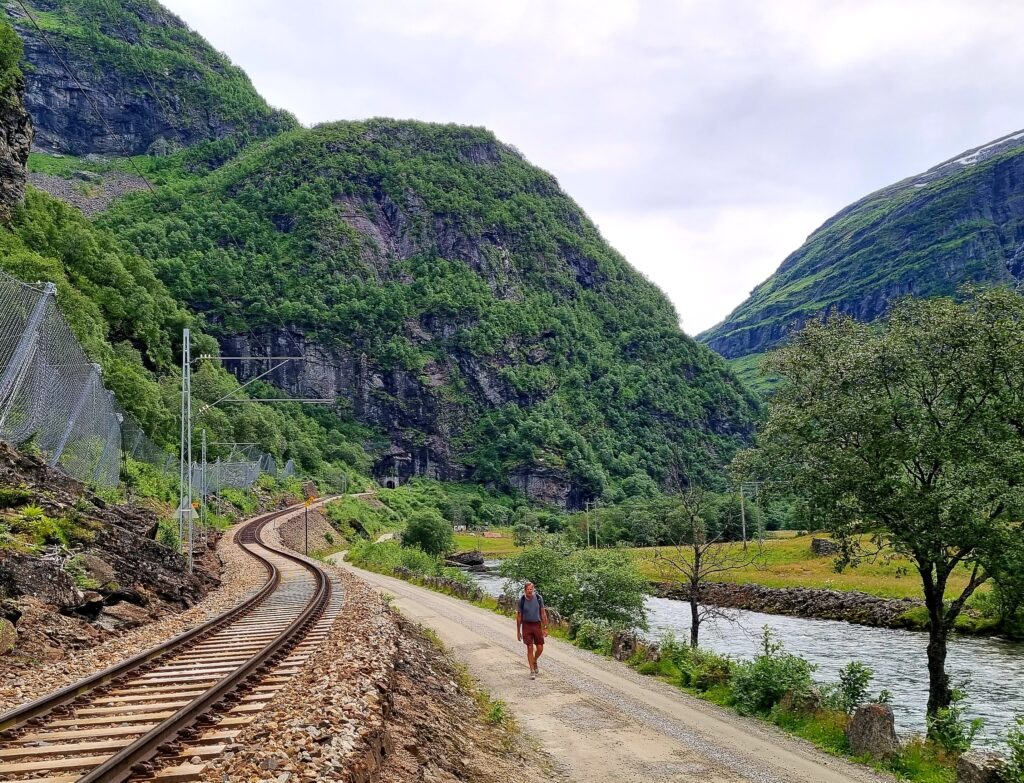
The train rolls gently out of Flåm station, just a few meters above sea level. At first, it follows the river as it winds its way through the valley, before the climb truly begins.
Soon, the train starts ascending the mountainside, moving in and out of tunnels along slopes that seem far too steep for a railway line to exist.
Yes, there are many tunnels.
And yes – the first few minutes can feel fairly modest.
But the higher you climb, the more the landscape opens up – and the longer the views last between each tunnel.

Scenery Along Flåmsdalen – Waterfalls, River and Valley Views
Throughout the journey, the train follows the narrow Flåmsdalen valley. The river twists along the valley floor below, framed by steep mountainsides rising sharply on both sides.
You’ll see waterfalls plunging straight down into the valley, old stone fences, and small farms clinging to patches of green in the rugged terrain.
In some places, the mountains feel close enough to touch. In others, the valley opens wide, offering long views down toward the river, hiking paths, and the road below – the same road many travelers later cycle back to Flåm.

Small but important tip:
Sit on the right-hand side of the train when traveling uphill from Flåm for the best views during most of the journey.

Kjosfossen Waterfall – The Stop Everyone Remembers
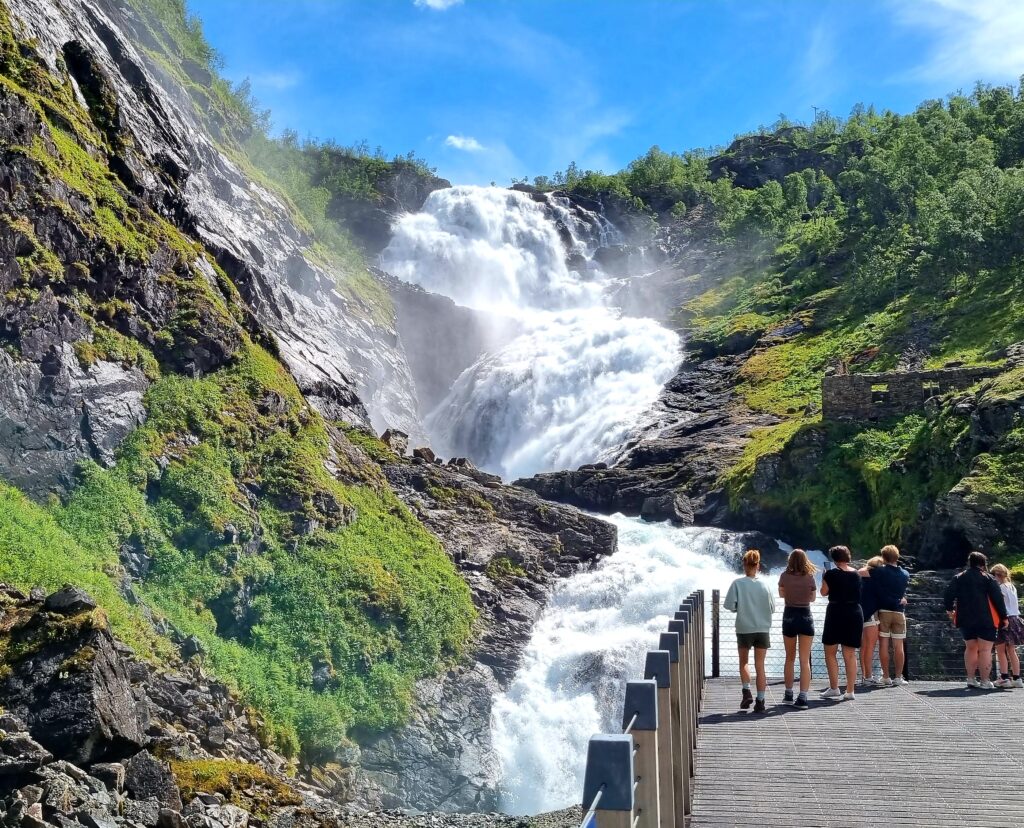
Midway through the journey, the train stops at Kjosfossen waterfall. You hear it before you see it – a deep, powerful roar echoing through the valley.
When the doors open, the force of the waterfall becomes immediately apparent.
Yes — step outside, even if your carriage is still in the tunnel. Especially then. You don’t want to miss one of the highlights of the journey.
Water plunges nearly 100 meters straight down the mountainside, and the spray settles like a mist over the viewing platform. Step too close to the edge and you will get wet. That’s part of the experience.

Kjosfossen and the Huldra – water, music and folklore
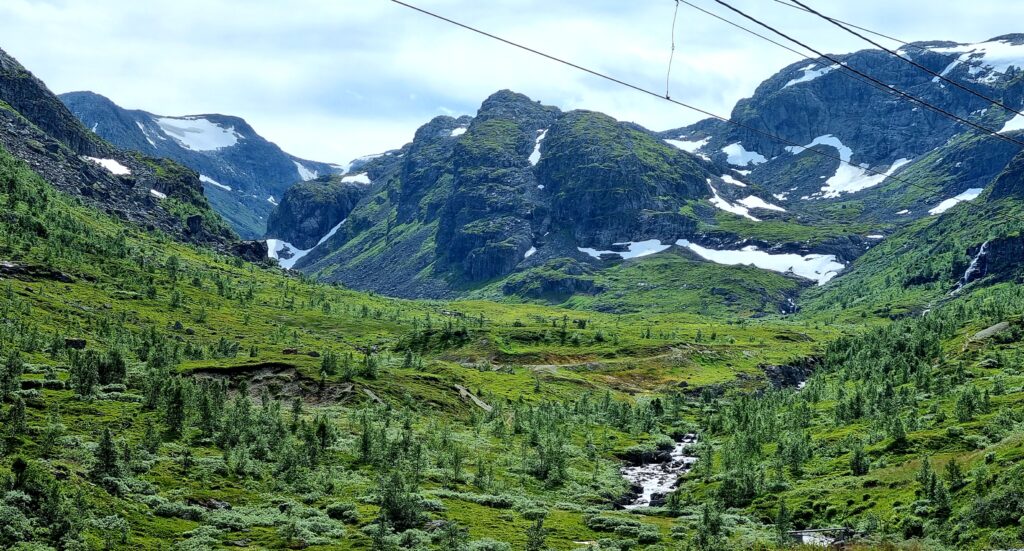
When we visited in summer, we even saw a dancing Huldra appear in the mist of the waterfall — a moment that felt unexpectedly magical. She emerged from the spray, disappeared, and then reappeared in another part of the rushing water. The effect is created by two dancers, giving the impression that she moves through the waterfall itself.
Huldra comes from old Norwegian folklore. She is described as beautiful and alluring, but with a hidden tail or a hollow back — a reminder that not everything that appears charming on the surface can be trusted.
It’s a brief moment, but one that lingers long after the train continues its journey.
Myrdal Station – Where the Mountain Landscape Opens Up
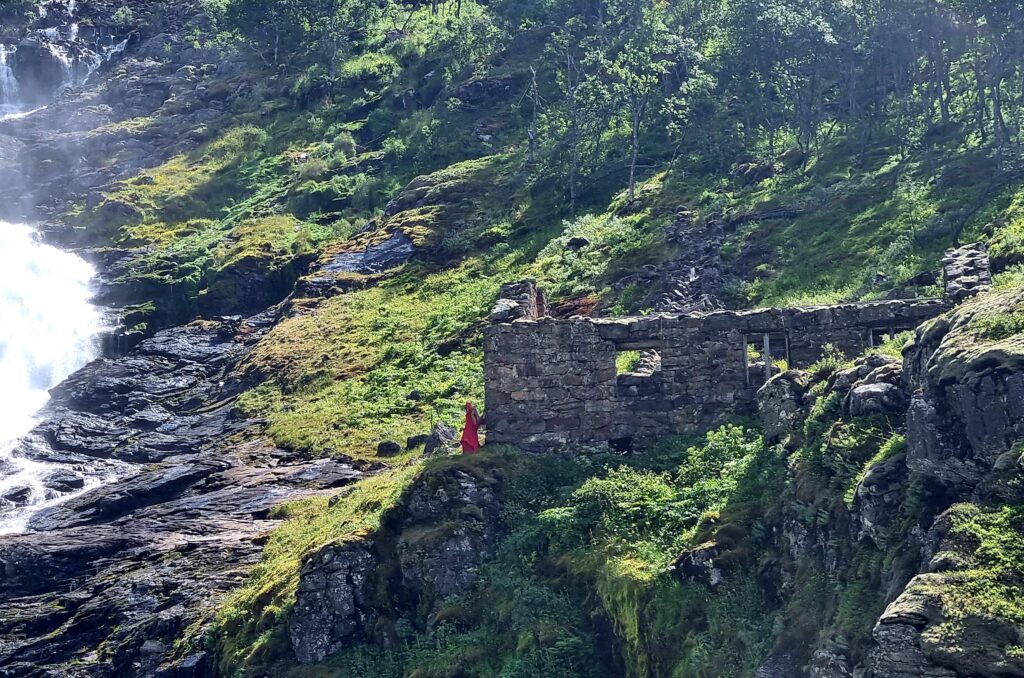
At Myrdal, 866 meters above sea level, the landscape changes character. The forest gives way to open mountain terrain, with streams, rolling slopes, and snow patches that often linger well into summer.
Myrdal station is a key junction on the Bergen Railway, and the contrast to the fjord below is striking. In under an hour, you’ve traveled from lush valley floor to open mountain country.
From here, the train returns to Flåm if you choose the round-trip option. Or you can take the experience one step further — cycling back down through Flåmsdalen at your own pace.
You can also continue by train on the Bergen Railway, heading toward either Oslo or Bergen.

Option 1: Flåm Railway Round Trip
This is the simplest and most accessible choice.
You travel from Flåm to Myrdal, enjoy a short stop at the top, and return the same way. On the way down, the views unfold differently, opening toward the valley and fjord below.
Best for travelers who:
- Have limited time
- Are traveling with children or older family members
- Want the Flåm Railway experience without additional planning
Our tip: Don’t dismiss the journey because of grey weather – the Flåm Railway is surprisingly atmospheric in rain.

Option 2: Flåm Railway and Cycling – Train to Myrdal, Bike Back to Flåm
This is the option I recommend when conditions allow.
Take the Flåm Railway up to Myrdal, then cycle back down through Flåmsdalen. For much of the route, you can almost roll all the way back to Flåm – with your brakes doing most of the work.
It’s an easy ride overall, and if you can ride a bike, you can ride this route.
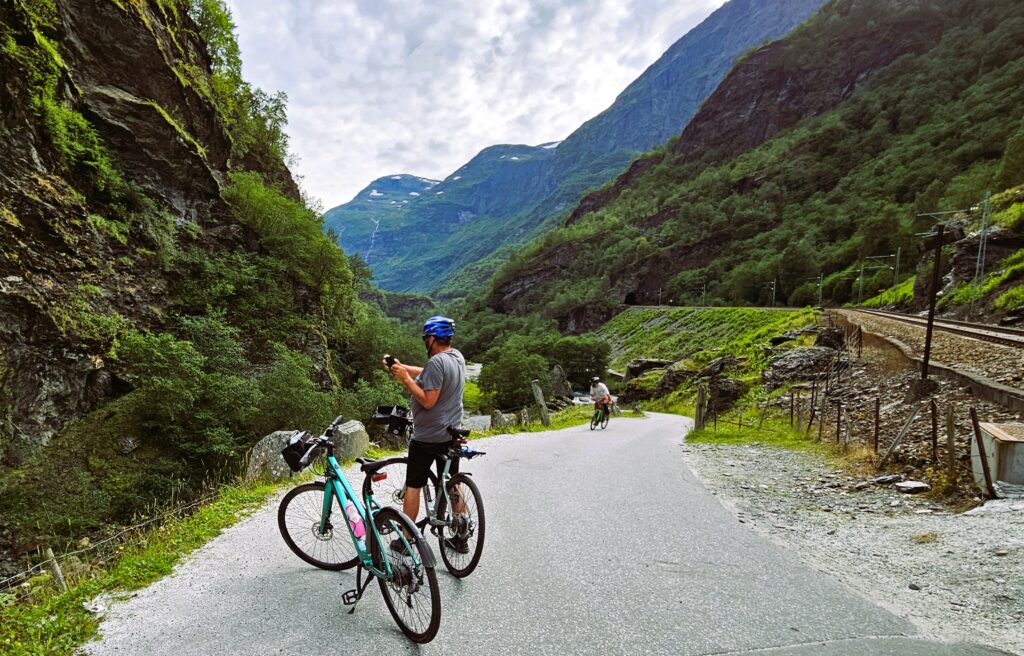
Cycling Down Flåmsdalen – One of Norway’s Most Scenic Bike Rides
The cycling route begins steeply, descending the famous hairpin bends from Myrdal down into the valley. Good brakes and full control of your bike are essential here.
Many cyclists choose to walk their bikes through the steepest sections – a smart choice not just for safety, but because it allows you to fully take in the views, waterfalls, and the valley unfolding beneath you.
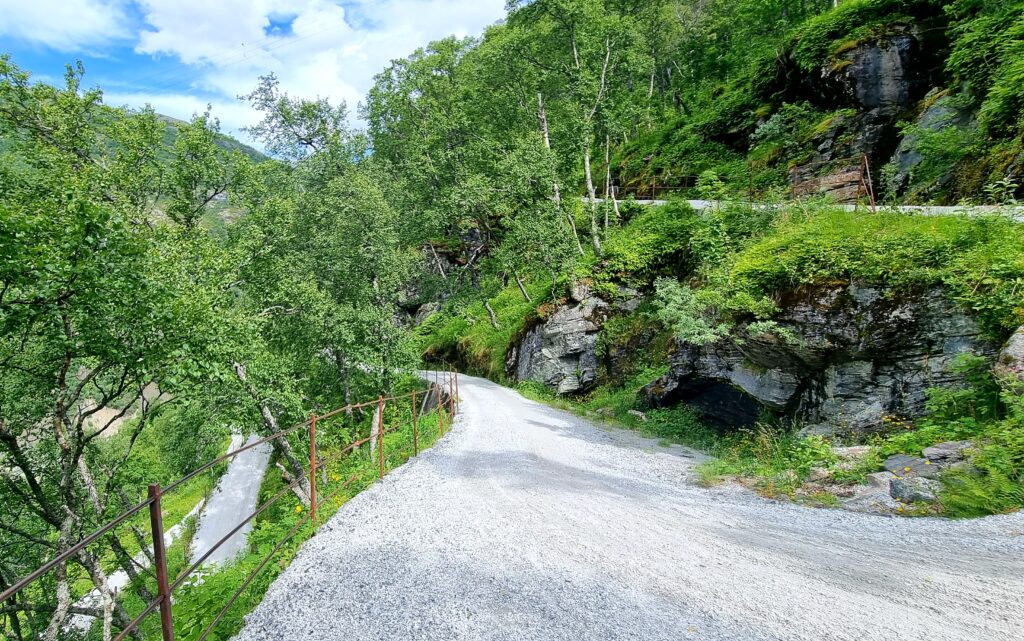

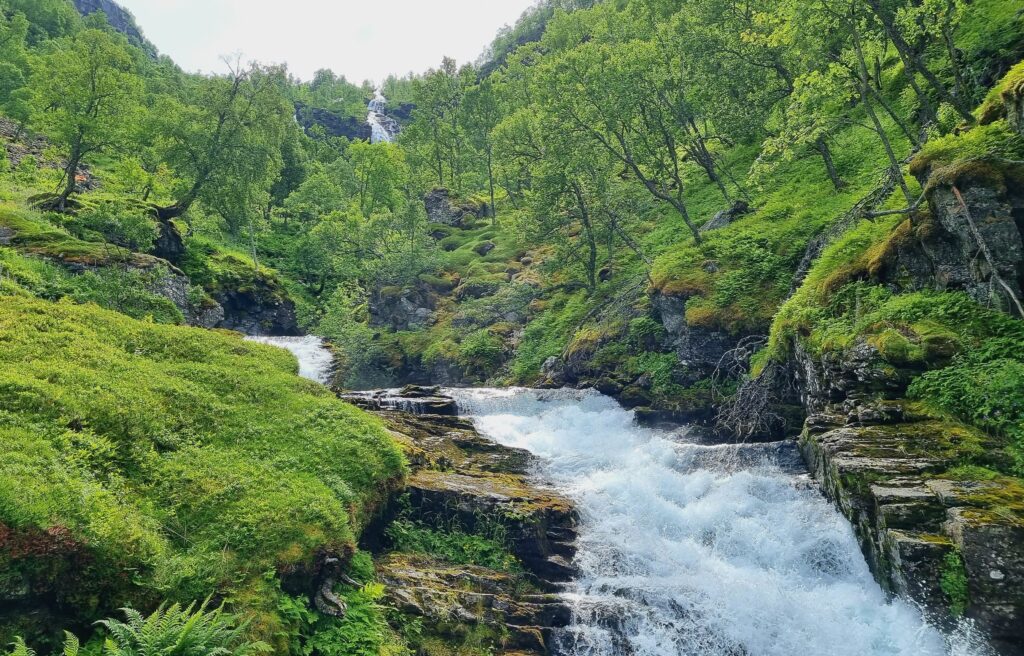
Further down, the road levels out and cycling becomes relaxed and enjoyable. The Flåm River follows you much of the way, with waterfalls cascading down the mountainsides and small streams crossing the road.
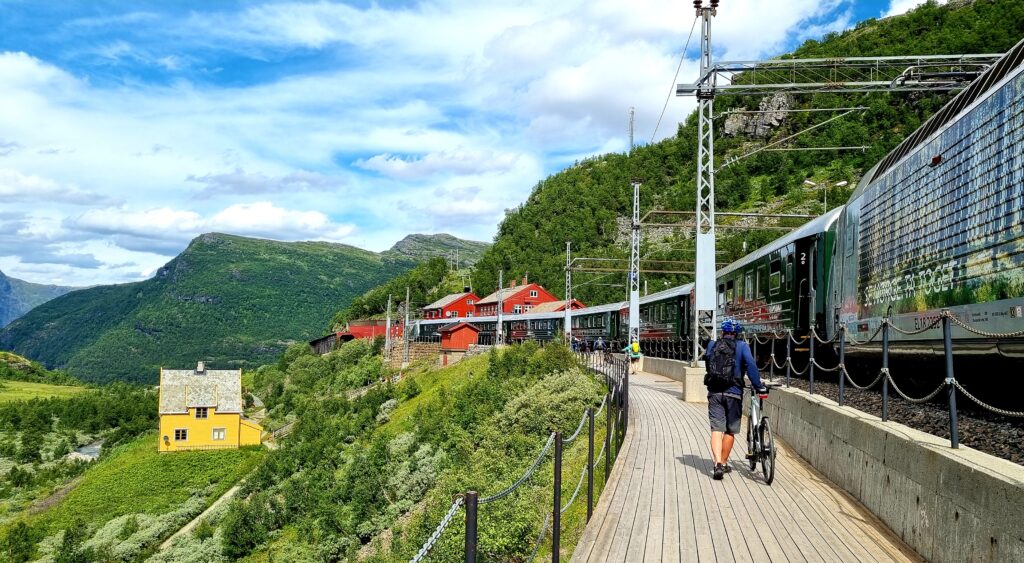
At several points, the railway runs close by, and occasionally the Flåm Railway glides past – a wonderful perspective shift, seeing the train from below instead of riding inside it.
Traffic is minimal along the route, and the only “traffic jam” you’re likely to encounter is a group of goats casually napping in the middle of the road.


Rallarrosa Stølsysteri – The Perfect Stop Along the Way
Roughly halfway down the valley lies Rallarrosa Stølsysteri, a natural stopping point for most cyclists. Here you can enjoy waffles, coffee, or ice cream while soaking in the quiet surroundings by the river.
This is the only place offering food along the route, making it an ideal place for a longer break. We spent a generous amount of time here, sitting in the sun by the river together with travelers from all over the world.
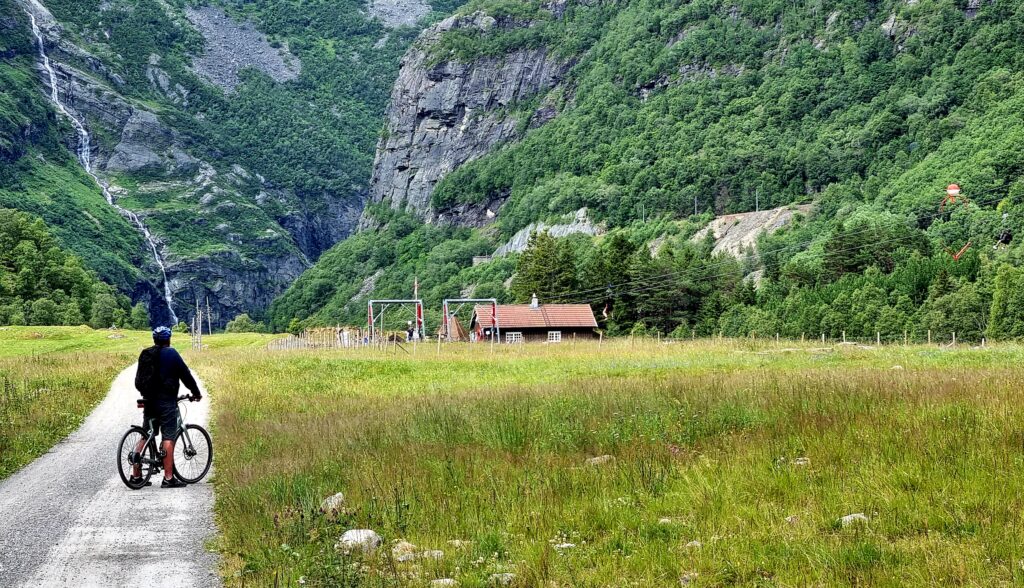
From Valley to Fjord – The Final Stretch Back to Flåm
The final part of the ride passes through green cultural landscapes with old farms, stone fences, and open views where the fjord gradually appears in the distance.
Traffic is minimal, and you set the pace yourself.
This ride doesn’t take time because it’s difficult – it takes time because you stop often. Waterfalls, river views, passing trains, mountain farms, and the sheer beauty of the valley make it hard to just keep cycling.
We expected to spend around two hours. It took closer to three and a half – and we wouldn’t change a thing.

Bike Rental or Your Own Bike?
Bike rental:
Easy and convenient. Several rental companies in Flåm offer sturdy bikes with good brakes, and many allow you to take the bike on the train or have it delivered to Myrdal.
Your own bike:
Gives more flexibility, but remember to reserve bike space on the train well in advance. Bike slots are extremely limited.
You do not need an e-bike for this route. There are very few uphill sections, and the journey gently carries you from mountain to fjord.

Why Flåm Railway and Cycling Is One of the Best Ways to Experience Flåm
The Flåm Railway offers one of the most accessible scenic train journeys in Norway. Combine it with cycling through Flåmsdalen, and you experience the landscape from two completely different perspectives – first from the train, then at your own pace on the bike.
If you have the time and decent weather, this combination delivers far more than a standard round trip.

Practical Information for Visiting the Flåm Railway and Cycling in Flåmsdalen
Best Time to Visit the Flåm Railway
The Flåm Railway operates year-round, but the experience changes significantly with the seasons.
Winter (December–March)
Snow, ice, and pure drama. The mountainsides turn white, waterfalls freeze (at least partially), and the train journey feels almost fairytale-like. This is the season for Flåm Railway round-trip journeys — cycling in Flåmsdalen is usually not possible.
Spring (April–May)
Snowmelt brings powerful waterfalls and rushing rivers, and the valley gradually turns green. This is when the landscape feels especially alive, though cycling conditions depend on snow levels higher up.
Summer (June–August)
Peak season in Flåm. Warm weather, lush greenery, and plenty of visitors. The Flåm Railway is often fully booked, Kjosfossen attracts crowds, and Rallarrosa Stølsysteri serves waffles nonstop.
The upside? Stable weather and perfect conditions for cycling down Flåmsdalen. Even when the train is full, the valley itself feels spacious and calm for cyclists.
Autumn (September–October)
Fewer people, slower pace, and rich autumn colours. Crisp air, softer light, and a quieter atmosphere make this a favourite time for many travelers.
Tickets and Booking for the Flåm Railway
- Advance booking: Recommended year-round and often essential in summer
- Tickets: Check the official Flåm Railway website for updated prices and combination tickets
- Bicycles: Bringing a bike on the train must be reserved well in advance — bike spaces are very limited

Combining the Flåm Railway with Other Experiences
Flåm is a natural hub for unforgettable experiences, and the Flåm Railway and cycling route can easily be combined with:
- Nærøyfjord Cruise: Boat trip from Flåm to Gudvangen through one of the world’s narrowest fjords (UNESCO listed)
- Stegastein Viewpoint: About 20 minutes by car from Flåm, offering panoramic views 650 meters above the fjord
- Rallarvegen to Finse: For experienced cyclists seeking a longer and more demanding ride
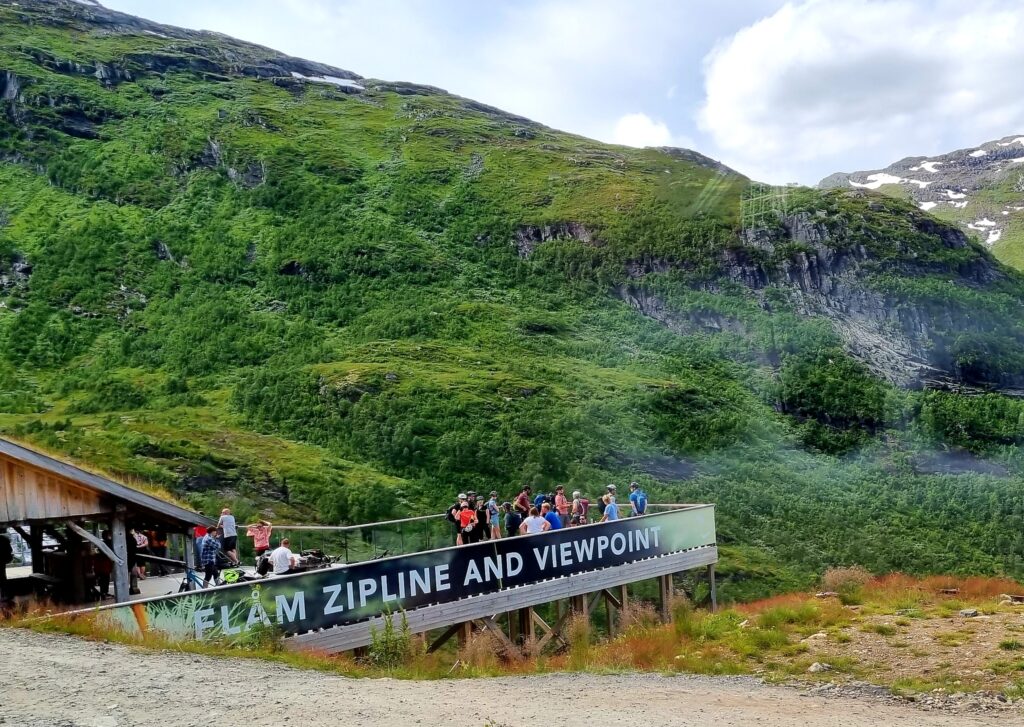
- Zipline Flåm: For those wanting an adrenaline boost — soaring high above the valley with views of rivers, waterfalls, and the railway line. I personally prefer solid ground, but many riders return with huge smiles.
Photography Tips Along the Flåm Railway and Cycling Route
- Sit on the right side of the train from Myrdal to Flåm for the best views
- At Kjosfossen, use a fast shutter speed to freeze the water — or a slow shutter for a silky effect
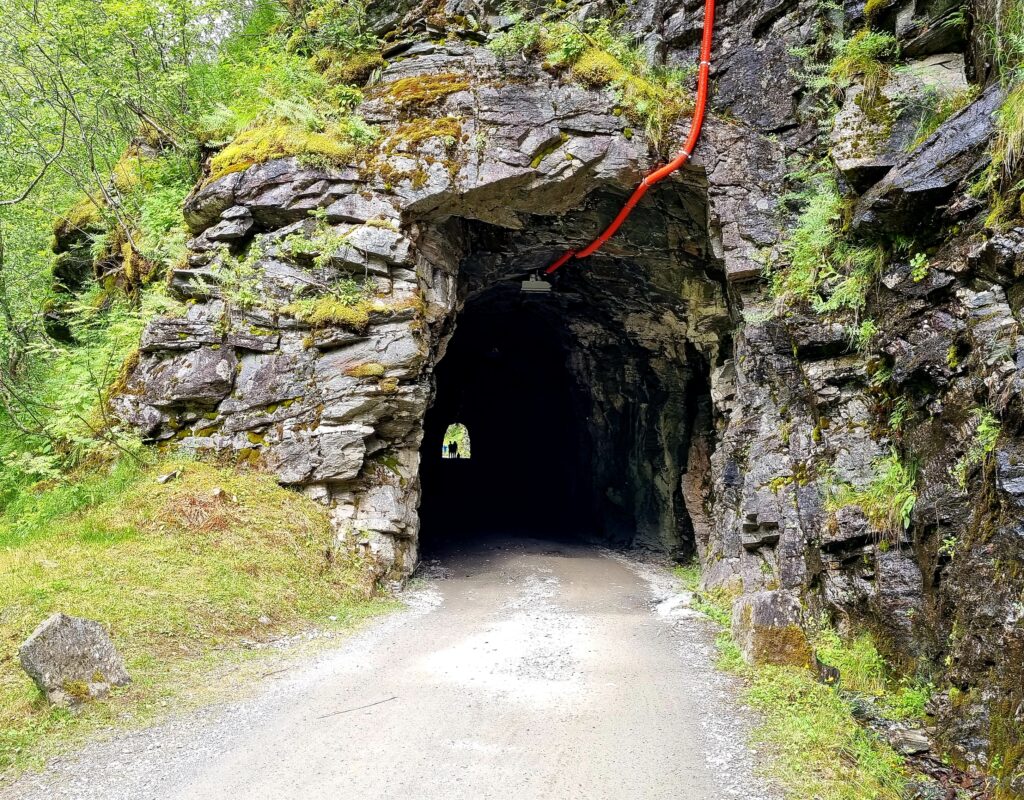
- Don’t dismiss the tunnels — the transition from darkness to light often creates striking images
- On the cycling route, keep your camera ready — there are photo opportunities all the way down the valley

Frequently Asked Questions About Flåm Railway and Cycling
Should I rent a bike or bring my own?
Renting a bike is the easiest option. Several bike rental companies in Flåm offer sturdy bikes with good brakes. Some deliver bikes to Myrdal, others allow you to bring them on the train.
Bringing your own bike gives more flexibility, but bike space on the Flåm Railway must be booked well in advance and is often sold out in high season.
Do I need an e-bike?
No. The route goes downhill almost the entire way, with only a few short uphill sections. A standard bike works perfectly.
Can I cycle UP from Flåm to Myrdal?
Yes — but unless you have an e-bike, you need to be in very good shape. It’s a steady climb for nearly 20 km, with the final section being very steep.
How long does the cycling trip take?
Plan for at least 2–3 hours if you want to stop along the way. We planned two hours and ended up spending three and a half — not because we were slow, but because there was so much to see.
Is there food or drink along the route?
Yes. Rallarrosa Stølsysteri, located about halfway down the valley, is the only place to eat along the route. They serve waffles, coffee, and homemade ice cream — and it’s also the endpoint for the zipline.
What about mobile phone coverage?
Coverage can be poor deep inside Flåmsdalen. That said, you don’t really need it — there’s only one road, and it goes downhill. You won’t get lost.
Can I book bike space on the train the same day?
It depends on the season. In summer, bike spaces are often fully booked weeks in advance. Outside peak season, you might get lucky. We managed to book bike space one day ahead in mid-July — but don’t count on it.
What if it rains?
The Flåm Railway works well in rain, but cycling becomes wet, cold, and potentially unsafe due to slippery brakes. Check the forecast and aim for dry weather if you plan to cycle.

Ready to experience the flåm railway and cycling for yourself?
The beauty of the Flåm Railway is that it truly is for everyone. A round trip by train requires nothing more than a ticket and the willingness to sit back and take it all in.
And while cycling may sound demanding, it’s surprisingly accessible. The route goes downhill. You choose the pace. You stop whenever you want. If you can ride a bike, you can do this.
My advice?
If time and weather allow, choose the Flåm Railway and cycling combination. It gives you the full experience – and it’s one you’ll want to return to.
So, when will you experience the Flåm Railway and cycle through Flåmsdalen?


2 Comments
Pingback:
Pingback: